

























































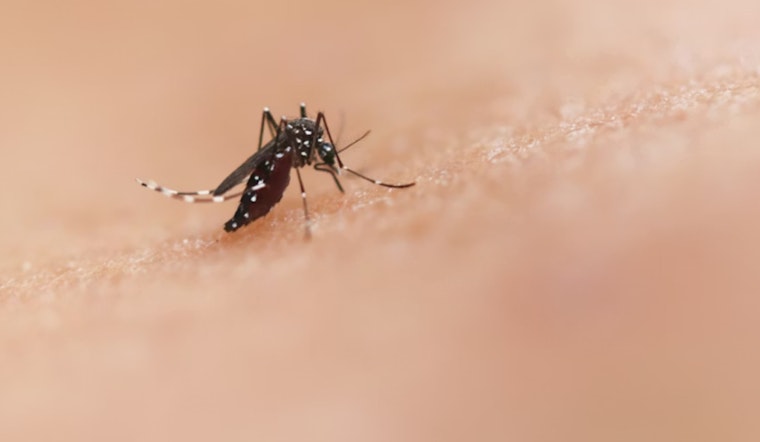
Hawaiʻi's forests are carrying more avian malaria than conservationists wanted to believe, according to new research. Scientists found the parasite in almost every forest bird community they checked, and they warn that low-level infections, even in common non-native birds, are enough to keep the disease circulating through mosquito bites. The findings ramp up the urgency for mosquito control and other conservation moves to protect the islands’ already vulnerable honeycreepers.
Study at a glance
Published Feb. 10, 2026 in Nature Communications, the study analyzed 4,218 blood samples from 34 bird species at 78 forested sites on Kauaʻi, Oʻahu, Maui and Hawaiʻi Island. The parasite showed up at 63 of 64 well sampled locations. Researchers combined field measurements of parasite levels in birds with controlled infection trials in the lab to estimate how infectious different bird species are to the southern house mosquito, Culex quinquefasciatus.
How low-level infections keep malaria moving
Laboratory experiments showed that even birds with very low parasite loads can infect mosquitoes, and that longer stretches of low to moderate infectiousness probably generate more infected mosquitoes over time than brief, high-parasite spikes. As reported by UC Santa Cruz News, the team exposed hundreds of mosquitoes to infected blood and tracked how parasite levels, temperature and time since feeding shaped mosquito infection rates.
Nearly every bird community can sustain malaria
The study found broad overlap in infectiousness between native and introduced bird species, which means communities dominated by non-native birds can still maintain transmission wherever mosquitoes persist. That gradual relationship between parasite load and infectiousness helps explain why malaria turned up across such a wide range of habitats in Hawaiʻi, and why rising temperatures could push the disease into higher-elevation refuges that were once too cool for mosquitoes. Nature Communications notes that variation within each bird species, combined with mosquito feeding preferences, effectively widens the parasite’s host list and geographic reach.
What it means for native honeycreepers
For native honeycreepers already hammered by disease, habitat loss and predators, the implications are bleak. Some species suffer very high mortality when infected, and a few have already disappeared from the wild. A University of Hawaiʻi summary of the paper points out that these dynamics complicate recovery plans for species such as the ʻakikiki and increase the risks facing others like the ʻiʻiwi. University of Hawaiʻi says the new results will feed directly into ongoing recovery planning and mosquito-control programs.
Mosquito control and next steps
The paper strengthens the scientific case for aggressive mosquito suppression already underway in parts of Kauaʻi and Maui, including BTi larvicide treatments and releases of incompatible or sterile male mosquitoes, as conservationists race to hold on to remaining refuges. Coverage of local pilot efforts, such as an innovative mosquito release on Kauaʻi, has highlighted how these tools could ease transmission pressure on endangered birds. Conservation planners say the new data will help them decide where and when to deploy these interventions.
The study, published Feb. 10, 2026, underscores that avian malaria is now broadly distributed across Hawaiʻi, forcing managers to balance immediate mosquito suppression with longer-term strategies such as captive breeding, habitat restoration and bolstering disease resistance in host species. The research leaves agencies and nonprofits facing a stark choice: rapidly scale up mosquito control to protect key refuges, or accept that many native bird populations will continue to decline.





