

























































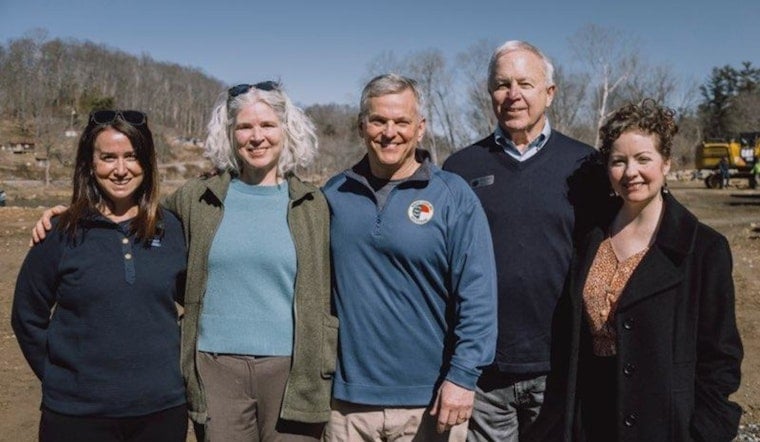
In a practical move to tackle the persistent issue of flooding, Governor Josh Stein and the North Carolina Department of Environmental Quality (DEQ) have allocated $5.7 million for flood resilience projects within the French Broad River Basin, as per the governor's office. This funding supports eight diverse initiatives aimed at mitigating the risk of flood damage in the region, going beyond simply rebuilding what was lost to enhancing future preparedness. The projects span from floodwater storage creation to infrastructure relocations, promoting both community safety and water quality improvements.
The grants are a continuation of an ongoing effort by the DEQ, with a prior investment of $3.16 million already dedicated to flood resilience within the same river basin. "Rebuilding western North Carolina after Helene means rebuilding stronger and smarter to prepare for future storms," Governor Stein was quoted in the statement obtained by the governor's office. In the face of increasing storm intensity and frequency, these developments signify a responsive and forward-thinking approach, aiming to better equip the communities of North Carolina against the adversities of natural disasters.
The state’s largest flood mitigation initiative, the NC Flood Resiliency Blueprint, is a science-driven and stakeholder-involved scheme that provides local governments and organizations with the necessary tools and data towards strategic flood resilience planning and execution. As well as being assigned by the NC General Assembly, the Blueprint has been met with substantial legislative backing, channeling a total of $96 million into projects across various river basins in North Carolina, including the French Broad, according to the official announcement.
Among the highlighted projects, Woodfin's Riverside Park will receive improvements to its stormwater systems and riverbank stabilization, contributing $284,000 to local resilience. Similarly aimed at reinforcing riverfront areas, the Town of Clyde will develop a floodable park courtesy of a $401,226 grant. The projects unfold as part of a broader strategic initiative, aligning with local comprehensive plans to not only address immediate risks but also to set the groundwork for sustainable living spaces, resilient to the unpredictable tantrums of nature.
With these vital funds, communities like Canton and Black Mountain envision a future that values both safety and ecological sanctity. For instance, Canton is set to introduce a new river access park and stormwater improvements, receiving a generous $450,000 boost. Black Mountain's Veterans Park will see the unfolding of interconnected projects to combat erosion and improve water runoff, with a sizable $1,650,000 grant facilitating its ambitious environmental goals. By investing in these types of infrastructure, the state exemplifies a commitment to fostering robust habitats for both humanity and nature to thrive, regardless of the coming tides.
Hendersonville also stands to benefit, with two separate undertakings designed to curb flood damage. The city's Lower Mud Creek area will undergo floodplain restoration, backed by a $100,000 grant, while municipal stormwater upgrades have secured $356,000.





