

























































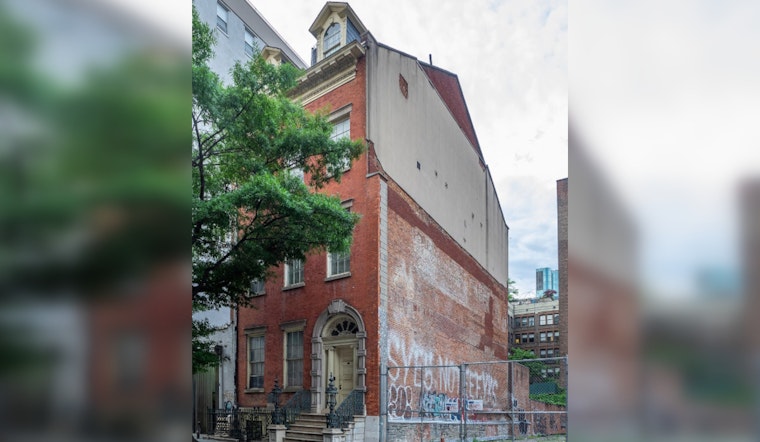
The Merchant’s House Museum in NoHo has unveiled a hidden passage inside a seemingly ordinary piece of furniture. Museum staff revealed that the vertical route, concealed behind a second-floor dresser, includes a ladder and a small two-by-two-foot cubby leading to the ground floor. Historians now believe it served as a safe house on the Underground Railroad. Preservationists describe the discovery as exceptionally rare, and museum leaders say it will reshape how the house is presented to visitors.
Hidden passage revealed
Architects and preservationists who inspected the house documented a narrow vertical passage concealed along a west wall. Pulling out a heavy bottom drawer exposes a rectangular opening cut into the floorboards that drops into an enclosed space with a ladder, as reported by Spectrum News NY1. Experts described the feature as a “masterwork of deliberate concealment” designed to be undetectable to slave catchers. Michael Hiller, a preservation attorney and Pratt Institute professor, told NY1 the discovery is “generational” and among the most significant finds of his career.
Museum response and programming
The Merchant’s House Museum, which opened to the public in 1936, already has a special show on its calendar about slavery and the 19th-century merchant class for Summer 2026, signaling a broader reframing of the site’s story. The exhibition, billed as “Slavery in Plain Sight: A 19th Century Merchant’s Home,” will focus on the city’s commercial ties to slavery and objects in the Tredwell collection. For local visitors, the museum at 29 East Fourth Street is set to function as both a preserved period home and an evolving place of interpretation. Details are listed by the Merchant’s House Museum.
How the house fits into the city's past
The house was built by Joseph Brewster in 1832 and sold to merchant Seabury Tredwell in 1835. The Tredwell family occupied the home until 1933, before it opened as a museum in 1936, according to the Landmarks Preservation Commission. The LPC report and preservation archives emphasize the house’s extraordinary continuity of original furnishings and interior fabric, which makes any evidence of clandestine activity especially notable. That intact provenance is why scholars say material clues like a concealed ladder can upend long-standing interpretations.
What officials and historians are saying
City leaders and preservation experts are treating the find as a vivid new piece of New York abolitionist history. “Many New Yorkers forget that we were part of the abolitionist movement,” Manhattan Councilmember Christopher Marte said, and Councilmember Harvey Epstein called the discovery “a critical piece of the overall struggle for freedom and justice,” as reported by Spectrum News NY1. NY1 also reports that the museum plans to fold the discovery into its tours and exhibits and to open newly documented spaces for research and public access.
Preservation and next steps
The discovery has already sparked calls for more archival digging and careful conservation. Earlier historic surveys had noted a short secret passage between parlors and floated the idea that it might be a maintenance feature or a dead end. Recent inspections, however, identified a deliberately concealed vertical route that lines up with known abolitionist concealment strategies. Village Preservation and archival resources show the Merchant’s House has long sat at the center of preservation debates, making this new evidence both a scholarly breakthrough and a civic moment.
Museum conservators and outside scholars say further study is on the way, and the coming months are expected to bring more documentation, contextual analysis, and updated tours. For neighbors and history seekers, the find turns a familiar NoHo landmark into an active site of investigation, a reminder that even the most thoroughly studied buildings can still reveal new stories about how freedom was pursued in the city.




.jpg)