

























































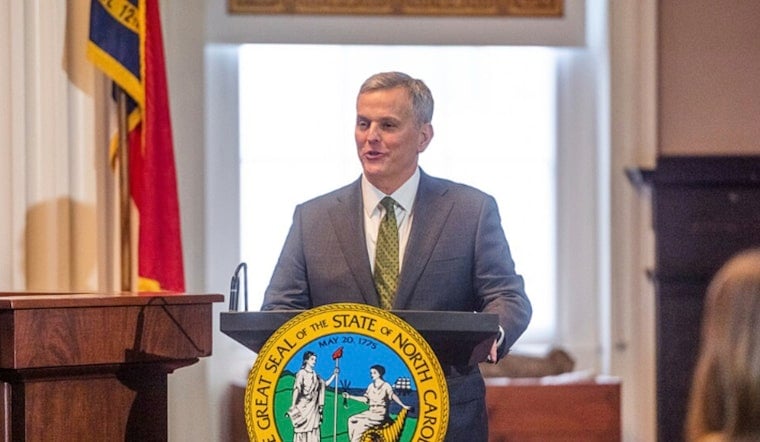
As the United States marks its 250th year since its founding, North Carolina's Governor Josh Stein invites us to ponder the contributions of his state to the nation's ongoing quest for a more perfect union. In a column shared with media outlets, Stein highlights pivotal moments from North Carolina's past that echo through today's democratic challenges and achievements, according to the Governor's Office.
The theme of remembrance and continuity is front and center as Stein recalls the Moores Creek Bridge battle of 1776 where patriots under Colonel James Moore and Richard Caswell achieved a decisive victory, it was a catalyst for independence sadly at the cost of lives, and it was just the starting line for a state that would later contribute to the constitutional foundations of the United States. Stein draws a direct line from the actions of these early North Carolinians to the standards of government and individual liberties Americans strive to uphold today.
Dipping further into the well of history, the Governor recounts how North Carolina was the first colony to officially call for independence from Great Britain with the Halifax Resolves. He fortifies his narrative by quoting Colonel Robert Howe's unanimous sentiment towards independence, asserting, "Independence seems to be the word; I know of not one dissenting voice," as he reminded his readers about the decisive steps taken by the Fourth Provincial Congress in April 1776, as per the Governor's Office.
Navigating through the state's historical milestones, Stein touches upon the Hillsborough Convention of 1788 where politicians like Willie Jones insisted on the Bill of Rights to protect individual freedoms from potential government overreach, this insistence led to the drafting of a constitution with these critical amendments. The Governor uses these vignettes to champion the link between the past and the present, urging contemporary Americans to engage with democracy actively and vigilantly, keeping in mind the trials and convictions of those who came before us.
Reflecting on the journey thus far, Governor Stein's column serves as a reminder and a rallying cry that democracy is a practice that must be actively sustained and cultivated. He leaves his audience with a thought-provoking message: "Two hundred and fifty years later, our democracy is something we must practice, protect, and pass on," as mentioned by the Governor's Office.




