

























































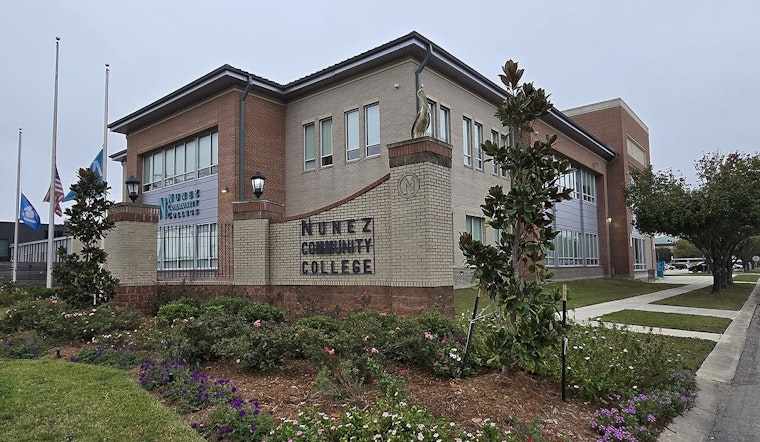
Nunez Community College is teaming up with the Society of Manufacturing Engineers to build what they hope will be a nonstop talent pipeline for Gulf Coast shipyards, ports and maritime manufacturers. The effort kicked off regionally in January, when educators, industry leaders and K-12 officials met to start drawing clear lines from local classrooms to waterfront careers. Organizers say the work is meant to get ahead of a wave of hiring, with projections pointing to as many as 75,000 shipbuilding and naval-defense jobs that could be needed by 2028.
Regional Kickoff Drew Industry and K-12 Partners
As reported by New Orleans CityBusiness, the January gathering at Nunez's Student Testing and Career Counseling Center pulled in a who-is-who of regional players, including Venture Global, LED FastStart, Greater New Orleans Inc., Boeing, Vivace, LSU Health New Orleans, the Crescent River Port Pilots Association and Port NOLA. SME program manager Cara Pattison told attendees that "Filling the maritime manufacturing workforce starts with the right people in the room." College officials added that Nunez was tapped as one of six partner colleges in part because of its location in the thick of shipyards and port employers.
SME's Model and the College Cohort
According to SME, the Maritime Manufacturing Workforce Pipeline - Gulf Coast builds on the group's Manufacturing Imperative - Workforce Pipeline Challenge and its SME PRIME education foundation. The goal is to create K-20 pathways, dual-credit options and industry-aligned credentials that line up with real jobs. SME's announcement names six initial colleges, including Nunez, Mississippi Gulf Coast Community College and Pearl River Community College, alongside three institutions in Alabama. The organization notes that the model and its shared resources are intended to help close a projected national shortfall of more than 75,000 maritime manufacturing jobs by 2028.
Nunez Plans Certificates and a Plaquemines Training Site
As outlined by Nunez Community College, the school rolled out a Certificate of Technical Studies in Maritime Operations in August 2025, with tracks focused on equipment and transportation operations, maintenance and utilities, and safety and logistics. College leaders said they have already teamed up with Plaquemines Parish Schools to open a temporary workforce training site and are working on a permanent facility to widen access across the parish. Nunez officials added that the program is being built with nationally recognized credentials embedded so graduates can step into port and shipyard roles with minimal extra training.
Why Employers Are Watching
In an SME press release, Jeannine Kunz stated that "The maritime industrial base is essential to our nation’s security," and the group said the initiative will tap SME PRIME to supply curriculum, equipment, teacher training and student scholarships. SME and its college partners argue that standardized credentials and employer-shaped training will make it far easier for companies to hire workers who are ready on day one. Industry representatives at the kickoff said they are particularly focused on safety credentials and short, practical pathways into operations and maintenance jobs.
What This Means for Workers - and What's Next
Nunez officials say the certificate options and the Plaquemines training site are meant to create quick, targeted entry points into high-demand roles such as heavy-equipment operation, maintenance and logistics, according to Nunez Community College. Greater New Orleans Inc. has projected thousands of direct and indirect jobs tied to projects like the Louisiana International Terminal, and Nunez leaders say they are building curriculum with input from port managers and employers to keep graduates job-ready. The college is continuing outreach with K-12 districts and industry to line up internships, dual-credit classes and formal hiring pipelines.
Organizers describe this as the opening phase of a multi-year push. They expect to see more employer-led course design, new credential offerings and additional local training sites come online as Gulf Coast shipbuilding projects ramp up. For residents and companies, the hope is that massive maritime investments translate into long-term local careers instead of short-lived labor crunches.





