

























































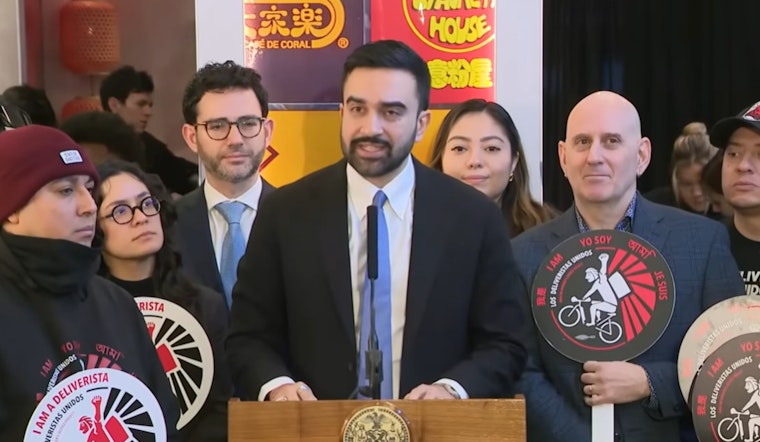
New York’s new consumer watchdog, Sam Levine, has initiated actions to review delivery app practices. In recent weeks, the Department of Consumer and Worker Protection has opened litigation, reached settlements, and released data indicating that platform design choices have affected courier tip income. Levine described the effort as addressing both workplace and street safety and noted that additional staff and funding will be needed to continue the work.
Levine's courtroom posture
Levine, who previously worked at the Federal Trade Commission, told Streetsblog that he intends to take large companies and executives to court rather than rely on quiet settlements. "I'm not afraid to take large companies to court," he said in a recent interview, pointing to a string of early enforcement moves as a signal that the agency will litigate aggressively. He also described New York as a test case other cities could copy if the city successfully enforces its new worker protections.
Settlements, suits and official findings
City officials announced a restitution and penalty package totaling roughly $5.195 million with Uber Eats, Fantuan and HungryPanda. According to a mayoral press release, the deal will send money to more than 49,000 delivery workers and could see as many as 10,000 wrongfully deactivated couriers reinstated. The administration has also filed suit against one app operator, Motoclick, and issued compliance warnings to scores of platforms as new Local Laws and delivery‑worker rules took effect. The same city statement points to a DCWP analysis that links app interface changes at some platforms with roughly $550 million in lost tip earnings for couriers, and officials say enforcement will require added staff and budget resources. Mayor’s Office
What it means for deliveristas and streets
Levine told Streetsblog that the delivery‑app sector in New York includes roughly 80,000 couriers, and he cast enforcement as part of a broader street‑safety mandate. When apps design incentives that reward speed or volume, he said, riders can be pushed into risky behavior. The city has rolled out new deactivation protections and tipping and pay‑transparency rules intended to reduce churn and make earnings more predictable, but worker advocates warn the agency will need more investigators to police compliance in real time.
Legal stakes: company challenges and court tests
The platforms are not taking the crackdown lying down. Major delivery companies have challenged the city’s upfront tipping requirement in court, arguing that the rule violates their First Amendment rights. A federal judge denied the companies’ request to block the law from taking effect on Jan. 23, and the firms have appealed, a procedural loss that nonetheless guarantees months of litigation and a likely appellate test of the city’s approach. Bloomberg
What’s next for DCWP
Levine said the immediate priorities include hiring compliance staff, developing monitoring systems, and focusing on higher-profile cases rather than lower-impact settlements, contingent on the mayor’s budget proposals to expand the agency. If the Department of Consumer and Worker Protection maintains staffing and succeeds in court, Levine suggested that New York could provide a model for other cities regulating platform design, tipping, and pay. The effort is currently both a policy initiative and a legal process that will continue in the courts and on city streets in the coming months.



