

























































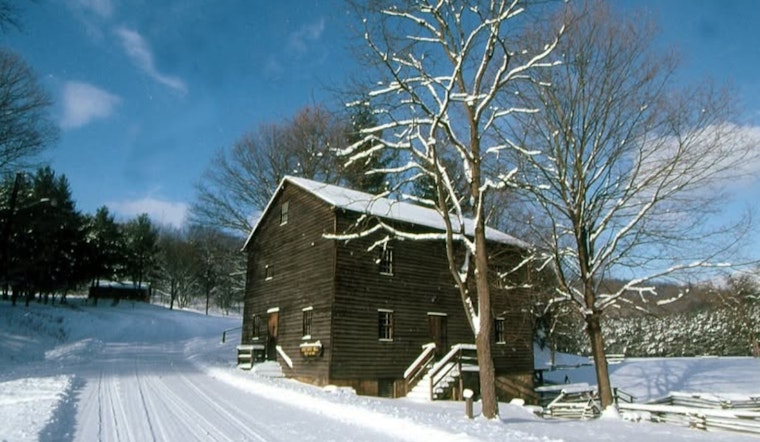
In a nod to Ohio's historical roots, the Ohio Department of Natural Resources (ODNR) has highlighted Gaston's Mill as its historic postcard of the month for February, as seen in a recent social media post. Located in Beaver Creek State Park, Gaston's Mill stands as a testament to the grist mills that were once central to the livelihood of pioneer settlements. Erected in 1830 and operational until the 1920s, these mills reflect the enduring perseverance of early settlers in the face of a challenging wilderness that later became known as Ohio, the first state formed from the Northwest Territory.
As the European and American settlers migrated to Ohio following the end of the American Revolution, they often found themselves in contention with the Native American Nations already residing there. The 1795 Treaty of Greenville, much like other agreements of its time, forcibly relocated Indigenous Nations to pave the way for these settlements. "The 1795 Treaty of Greenville opened much of the region for settlement by forcibly relocating Indigenous Nations to the state's northwest corner," detailed the Ohio Department of Natural Resources. By 1843, the Wyandot, the last tribe remaining in Ohio, left to resettle west of the Mississippi River.
Yet, Ohio's landscape wasn’t solely shaped by the hand of conflict but also by the migratory patterns of those who came to form its communities. Many settlers travelled along Zane's Trace, a pioneer path completed in 1798, and settled in its southern regions near towns like Cincinnati, Marietta, and Chillicothe. The northeast corner saw an influx of New Englanders, expanding upon land that was once Connecticut's Western Reserve.
Pioneering life in Ohio demanded that settlers be indefatigable in their quest to carve out a living. They cleared dense forests to make room for their budding communities and to plant their crops. "In a time before reliable roads or canals, pioneer settlements had to be self-sufficient to meet everyone's needs," states the ODNR’s Facebook page. Self-sufficiency matched with an ironclad work ethic allowed for the growth of not only mills but also religious buildings, community spaces, and areas for celebrations amidst the untamed backdrop of the state.





