

























































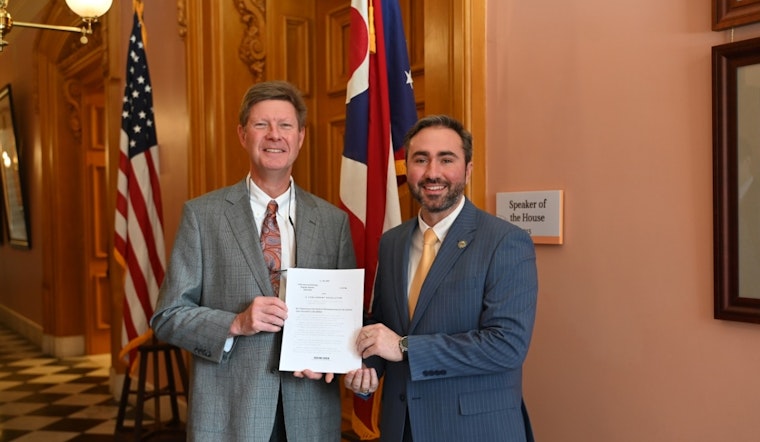
Ohio state politicians are stirring the pot with a bold move to fundamentally reshape the landscape of education governance. State Representatives David Thomas of the Jefferson district and Mark Hiner of Howard have come forward with a resolution to altogether dismantle the U.S. Department of Education. As reported by the Ohio House of Representatives, this resolution suggests a transfer of power strictly back to the states, local entities, and families, echoing sentiments long voiced by conservative leaders devoted to shrinking federal oversight.
The advocates of this measure argue that the commitment to federalism should indeed apply to the sphere of education, echoing the founders' vision of a predominantly state-led union. Representative Thomas reportedly stated through the Ohio House of Representatives, "Unless citizens change the federal constitution to include responsibility for education at the federal level, this service rests at the state and local level and should return there." They aim to maintain the flow of federal tax dollars to states while doing away with the federal bureaucratic touch they perceive to be more meddlesome than beneficial.
Imparting further momentum to this push, similar discussions are under development in the Ohio Senate. Senator Andrew Brenner of Delaware echoes the same contrarian pulse to federal educational oversight, initiating a companion Concurrent Resolution that reinforces the principle of state-led education policy. This initiative reflects a broader political desire to tailor educational policy more acutely to the localized needs of Ohio's students and families.
Both Thomas and Hiner manifest a conviction that proximity to the classroom should command authority over decision-making. "Education works best when decisions are made closest to the classroom," Hiner said, in a statement obtained by the Ohio House of Representatives, as he advocated to significantly reduce the span of the U.S. Department of Education. Creating a task force and urging state agencies to ascertain programs and laws that will require revamping is part of the resolution, which signals a deep commitment to local control, parental involvement, and accountability in the education sector.
Amidst these discussions, the proposed legislature awaits assignment to a number and committee, marking the first steps towards a potential overhaul of the administrative guardianship of Ohio's educational framework. The outcome of this resolution, still in its infancy, may well have far-reaching implications for the state's approach to managing its schools, parents, and — most significantly — its young students.





