

























































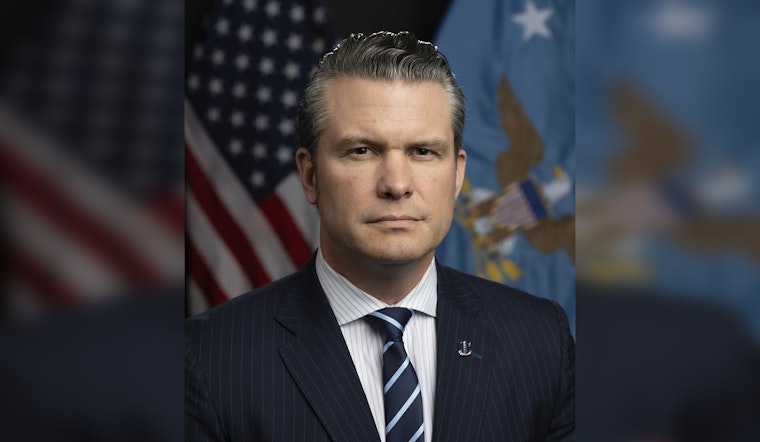
Defense Secretary Pete Hegseth pressed Army Secretary Dan Driscoll last week to remove Col. Dave Butler from a senior public affairs post, and Butler quickly responded by submitting his retirement paperwork, according to defense officials. Inside the Pentagon, the move has reignited concerns about how much political muscle is being flexed over senior military jobs.
According to The New York Times, two defense officials said Hegseth blamed Butler for a series of news stories late last year that cast Hegseth in a less favorable light than Army Secretary Dan Driscoll and that Hegseth directed that Butler be removed. The Times reported that this episode is part of a broader pattern in which Hegseth has weighed in on personnel calls across the armed services.
The Washington Post reported that Hegseth raised his concerns about Butler directly with Driscoll during a private conversation at the Pentagon. Rather than delay a list of about three dozen promotion-eligible officers who were waiting for White House approval, Butler opted to retire, according to that account. Army officials, cited in the Post, offered only a short confirmation of Butler’s retirement and declined to detail what prompted it.
Who Is Col. Dave Butler?
Col. Butler had been serving as the Army chief of staff’s top strategic communications adviser and previously worked as spokesman for Gen. Mark Milley when Milley was chairman of the Joint Chiefs of Staff. He also led public affairs for U.S. forces in Afghanistan. Those roles made him a familiar and frequently praised figure to both reporters and senior commanders, according to Fox News.
Why This Matters
Butler’s exit is the latest in a series of personnel changes that critics say line up with Secretary Hegseth’s effort to move aside officers who are closely associated with Gen. Milley, who has often drawn fire from Hegseth and former President Donald Trump. It is unfolding during a turbulent period for the Pentagon, with ongoing friction over promotions and leadership turnover. As The New York Times reported, several career officers say they fear political loyalty tests are starting to edge out the military’s traditional emphasis on merit and established promotion processes.
Reaction And Next Steps
In a statement provided to The Washington Post, Driscoll thanked Butler for his service and said he would be missed. Current and former Army officials quoted by the Post described Butler’s abrupt departure as both surprising and discouraging, portraying him as a nonpartisan, steady presence in an increasingly politicized environment. They warned that repeated moves of this kind could chip away at morale inside the ranks and weaken public trust in the armed forces.



