

























































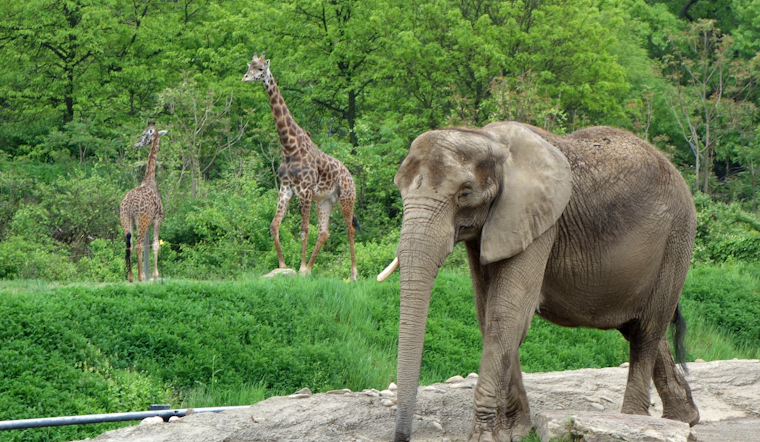
Allegheny County Common Pleas Judge Mary C. McGinley on Thursday tossed out the Nonhuman Rights Project's bid to free five elephants from the Pittsburgh Zoo & Aquarium, shutting down, for now, any move to a sanctuary for Savanna, Tasha, Angeline, Victoria and Zuri while setting the stage for the fight to climb into higher courts.
McGinley granted the zoo's motion to dismiss the Nonhuman Rights Project's habeas corpus petition, according to WESA. The petition argued the elephants share with humans a “fundamental right to bodily liberty,” while the zoo countered that under Pennsylvania law animals are treated as property and that constitutional liberty protections apply only to people.
The Nonhuman Rights Project says it will appeal the dismissal to the Pennsylvania Superior Court and cast the judge's willingness to seriously entertain its arguments as a step forward for the broader effort to win legal recognition of nonhuman rights. In a press release, the group said it will now take its case upstairs on appeal to seek “justice for Savanna, Tasha, Angeline, Victoria, and Zuri,” as detailed by the Nonhuman Rights Project.
How the Case Reached Thursday's Ruling
The lawsuit had begun to advance earlier this year after a January court order scheduled a hearing on the zoo's motion to dismiss and left room for possible live expert testimony, according to WPXI. Lawyers for the Nonhuman Rights Project and outside elephant experts leaned on research into elephant cognition and social lives as they pushed for habeas relief for the animals.
Zoo Response and Accreditation
In court filings cited by local media, the Pittsburgh Zoo said its elephants “are thriving under the compassionate care of their dedicated and expert professional staff” and pointed to its accreditation by the Association of Zoos & Aquariums as proof that conditions meet accepted standards. The zoo argued judges should not swap out existing regulatory oversight or scientific judgment for a new legal theory that treats animals as legal persons, according to WESA.
What Happens Next
The Nonhuman Rights Project's planned appeal to the Superior Court will test whether common-law tools like habeas corpus can be stretched to secure liberty for nonhuman animals, a strategy that has repeatedly hit legal headwinds. The group says it will keep litigating despite the dismissal; the appellate process could take months and would be decided on written briefs and, if the court agrees, oral argument. The Nonhuman Rights Project has outlined those next steps.
Legal Context
So far, courts have mostly shut the door on the Nonhuman Rights Project's personhood claims. In 2022, the New York Court of Appeals upheld the dismissal of the high-profile case over “Happy,” an elephant at the Bronx Zoo, holding that the writ of habeas corpus exists to protect human beings, not animals. That ruling, along with similar decisions, underscores the steep doctrinal climb facing any effort to win personhood status for animals in U.S. courts, even as a few judges and dissents have expressed discomfort with treating animals purely as property. For those legal details, Justia hosts the New York court's opinion.
Hoodline first covered the lawsuit back in October, when the Nonhuman Rights Project filed to free the elephants, and local interest has stayed hot ever since. For more on the animals and the activism surrounding them, see the petition that has drawn thousands of signatures on Change.org, and revisit our first look at the lawsuit for background on how this legal battle began, as reported by Hoodline.





