

























































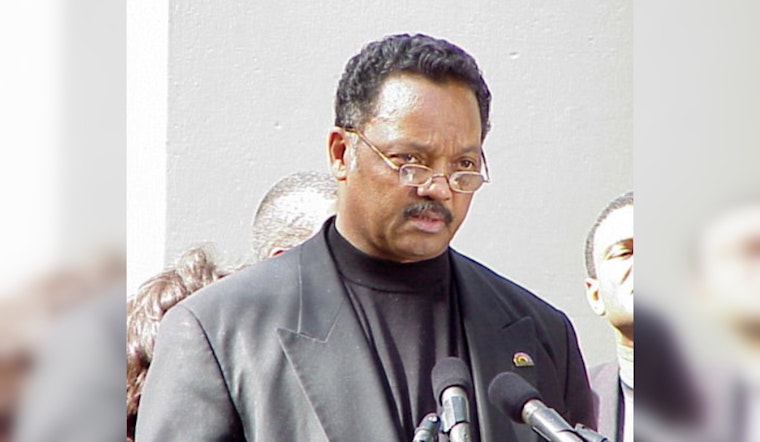
The life and legacy of civil rights leader Rev. Jesse Jackson, who passed away yesterday, have left a lasting impact, particularly in New York City, where his activism and presidential campaigns played a key role in shaping political change. Rev. Al Sharpton, founder of the Harlem-based National Action Network, highlighted Jackson's influence, stating, "He literally changed American politics, New York politics and kept the civil rights movement going," as reported by NY State of Politics.
In addition to helping elect New York's first Black mayor, David Dinkins, in 1989, Jackson's Rainbow Coalition played a key role in challenging incumbent Mayor Ed Koch. Reflecting on Jackson's 1988 presidential campaign, Sharpton remarked, "He won the city of New York, which made us believe in '89 we could win — and we did, by electing David Dinkins," according to NY State of Politics. The campaign's inclusive approach brought a broad range of voters into the Democratic process, influencing not only New York politics but also setting a national precedent.
Despite his achievements, Jackson's journey was marked by controversy. In 1984, he faced significant criticism for using an anti-Jewish slur, a remark he later acknowledged as wrong. To repair relations with the Jewish community, he condemned the stereotyping of Jews and described Zionism as a "liberation movement," earning recognition from global Jewish leaders, as recalled by Rabbi Yair Hoffman in Gothamist.
Political science expert Christina Greer from Fordham University recognized Jackson's role in laying the groundwork for future movements and politicians. She highlighted how Jackson's bold approach to addressing critical social issues paved the way for figures like Senator Bernie Sanders and New York Assembly member Zohran Mamdani. Political scientist Jeanne Theoharis added that Jackson’s ability to address both everyday issues and racial justice helped establish the foundation for multiracial coalitions in New York politics.
Civil disobedience was a key aspect of Jackson's activism in the city. He was arrested several times for participating in protests, including a 1971 sit-in against discriminatory hiring practices and a 1999 demonstration following the police shooting of Amadou Diallo. Keith Wright, a former state lawmaker from Harlem, reflected on Jackson's dedication, stating that having Jackson support a cause spoke volumes, as reported by NY State of Politics. Wright recalled Jackson’s consistent presence at protests and his ongoing efforts for justice and fairness.
The legacy of Rev. Jesse Jackson in New York will undoubtedly remain a testament to his role as a barrier breaker for racial and social equality, a force of political change, and an inspiring leader who strived to uplift communities across the spectrum of American society.




.jpg)