

























































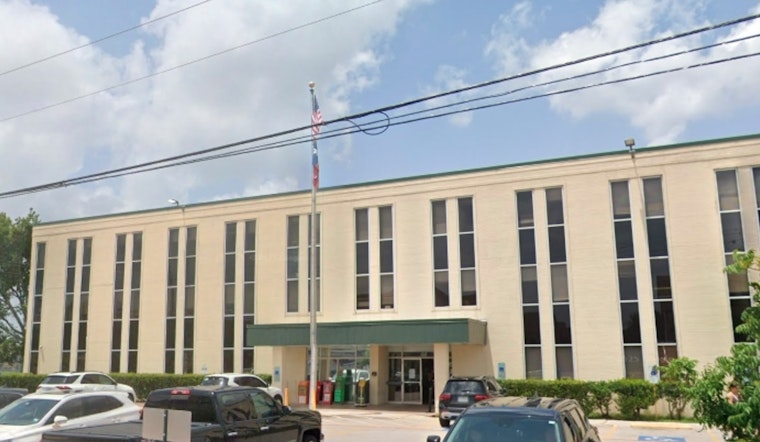
Detectives in Harris County say a quiet tax office in Scarsdale doubled as the hub of a registration hustle, where insiders and local business owners allegedly pushed through bogus vehicle registrations and title transfers for cash. The setup, investigators allege, let buyers dodge inspections and key paperwork, routed tens of thousands of dollars to the people behind it, and sent unvetted cars onto local roads. Three suspects are now in custody, and a fourth is still on the run as criminal charges move forward this week.
Adriana De La Rosa, the owner of Bella’s Multiservices in South Houston, was arrested and formally named in the case, while Oswaldo "Oz" Perez, described as an associate of the business, remains wanted. Former Harris County Tax Office employees Sarah Ambria Anderson and Renisha Touche Wilkins have also been charged, and records show both women were fired in April 2024. Detectives say Anderson and Wilkins pushed through nearly 200 fraudulent transactions at the Scarsdale branch, typically charging about $300 per deal while overriding system checks and burying paperwork. All four are charged with two counts of engaging in organized criminal activity, first-degree felonies that carry heavy potential penalties, according to Click2Houston.
Why skipping inspections matters
Investigators say the scheme was not just a paperwork shortcut. Dodging insurance checks, emissions testing, and residency verification can leave buyers unknowingly uninsured and short the state on sales taxes and fees, undercutting the safeguards built into the registration process. According to the Texas Department of Motor Vehicles, county tax offices are supposed to confirm current insurance and, in certain cases, complete VIN or emissions inspections before signing off on a title transfer. Skip those steps and you can end up with uninspected, uninsured vehicles on the road, where the financial fallout from a crash often lands on unsuspecting drivers and taxpayers.
How investigators say they were caught
The alleged operation did not unravel from a sophisticated sting so much as from some eyebrow-raising social media posts. Detectives say employees in another county first raised alarms after seeing online ads flashing piles of registration stickers and promising "no inspection[s] needed," which triggered an internal review and a joint investigation. Harris County Constable Precinct One investigators then traced payments tied to the scheme through Zelle, Apple Pay, and Cash App and uncovered deleted text messages between the tax office staffers and private business contacts. According to investigators, many of the handoffs of cash and paperwork happened in plain sight at public spots near the Scarsdale office, including a grocery store parking lot. Authorities are asking anyone who knows where Oswaldo Perez is to call Constable Precinct One at 713-755-5200, according to Click2Houston.
Not the first time
Prosecutors and county officials say the case looks uncomfortably familiar. In a separate prosecution highlighted by the Houston Chronicle in 2025, a former Harris County Tax Office employee admitted taking cash to process improper title transfers, a setup that officials said cost the state about $50,000 in lost sales tax. That earlier case, according to county leaders, led to new internal audits and closer coordination between the tax office and law enforcement.
Legal implications
All four defendants are charged with two counts of engaging in organized criminal activity, a statute that boosts the punishment range based on the most serious offense at the core of the conspiracy. Under Texas law, an offense prosecuted under Section 71.02 is treated one category higher than the underlying crime, which means that when the underlying conduct is a first-degree felony, a conviction can bring a sentence of up to life or 99 years in prison. The statute also allows for stiffer fines and additional sentencing enhancements if prosecutors establish certain aggravating factors under state law. The full framework is laid out in the Texas Penal Code.
Officials at the Harris County Tax Office say their own internal safeguards helped surface the suspicious activity and that the agency’s Special Investigations Unit partnered with Constable Precinct One and the district attorney’s office as the case developed. The investigation remains active, and prosecutors are expected to decide on any further charges or legal steps as they continue reviewing the evidence.





