

























































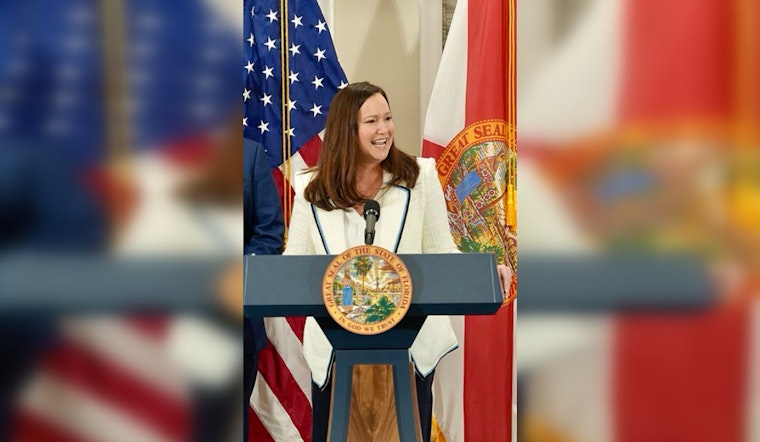
During the recent National School Choice Week, Senator Ashley Moody isn't just celebrating; she's pushing to scale Florida's educational approach across the nation. Moody, taking to the Senate floor, advocated for the school choice policies that she believes have turned Florida into a beacon of educational freedom. "I am honored to serve as a co-host this [National School Choice] week with the chairman of the Help Committee, Senator Cassidy, as well as my friend, Senator Tim Scott," Moody said, emphasizing the collaborative effort behind the movement. She cited decades of policy making as the foundation for Florida's current status, according to a video release on her official website.
Senator Moody detailed the strides made in her home state, like adopting universal school choice "a few years ago," which, functioning as a crucial lever for educational success, doesn't discriminate based on a child’s background, wealth, or living area. With a strong backing, the Education Freedom tax credit, recently signed into law, is looking to enlarge these opportunities, projecting effects on two million children nationwide. This expansion aims, as Moody puts it, "empowering parents by supporting educational freedom across the country." Her remarks, reflecting both pride and forward-thinking resolve, were shared on her official Senate website.
Moody is not without her supporters in this push for educational reform. Alongside Senators Cassidy and Scott, she claims an alliance unified by a shared vision for what they see as the future of American schooling – one that eschews one-size-fits-all models in favor of tailored educational paths. "The possibilities are endless when we do away with that one fits one size fits all approach and empower parents to choose what best fits their individual child," Moody said, as detailed in her official Senate website. Her commitment to advocating for school choice rests on a belief that with the right options, all of America’s kids could see the same chances for success that have been crafted in Florida.
The implications of such educational policy changes could be significant. As Moody looks to transplant her state's model to a national canvas, the dialogue on how best to educate the nation's youth is certain to ignite—both in the hallowed halls of the Senate and in the more localized arenas of community town halls. Parents, educators, and policy-makers will all weigh in on the promise and the potential pitfalls of school choice on an unprecedented scale. "And that is why I am committing to continuing to advocate for school choice, so that all of America's kids see the same opportunities that we've been able to offer to the children of Florida," Moody stated, envisioning a country where educational freedoms mirror those of Floridian success stories. The Senator's push, straddling both acclaim and skepticism, will undoubtedly stir the ongoing national conversation about the role of choice in the educational tapestry of America.





