

























































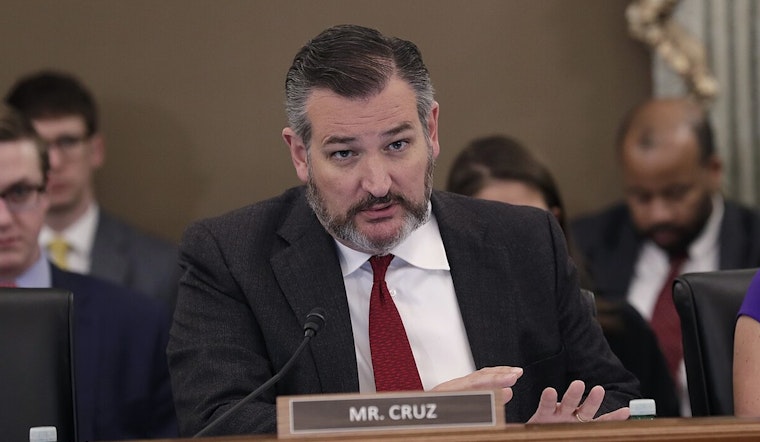
Amidst a rapidly changing media scenario, Senator Ted Cruz, Chairman of the Senate Commerce, Science, and Transportation Committee, posed a significant inquiry at a committee hearing regarding the relevance of media ownership rules in today's digital world. As reported by Senate Commerce, the hearing aimed to scrutinize current regulations which restrict broadcast station owners to a 39 percent audience reach limitation, a stark contrast with their unbounded online competitors.
"For over a century, broadcast media stood at the epicenter of American historical and cultural life," Cruz said, emphasizing how the landscape has drastically shifted. The committee is now challenged to possibly radically rethink these rules, confronting an environment where traditional broadcasters are struggling to maintain a foothold against the onslaught of digital platforms and behemoth tech companies with national and global presence.
The hearing centered on whether these ownership restrictions support or stifle viewpoint diversity, as an array of powerful digital entities, such as streaming services, news sites, and social media platforms command vast swathes of audience attention. Cruz pointed out that in the past, the limitations on ownership were integral to preventing a homogeneity of voices and ensuring a multiplicity of perspectives.
"Today, broadcasters are fighting to stay competitive," Cruz observed, tapping into the discourse on whether legally entrenched limits should pivot to meet the new digital standard. The FCC's consideration to lift or eliminate this cap has sparked debate over the potential consolidation of viewpoints and whether scaling broadcasters can truly foster investment in local news outlets. Some express concerns over a homogenization of newsrooms, potentially erasing the diverse local perspectives necessary for a robust democracy.
The 39 percent national TV audience reach cap, enshrined by Congress in 2004, remains a pivotal subject. According to Cruz's statement: "it may be the case that the FCC cannot modify the 39 percent cap because Congress set that number in statute." This underlines the legal constraints faced in re-evaluating these restrictions. The critical nature of the media’s role in shaping public discourse, despite the fragmentation of audiences across various digital platforms, makes this evaluation of market concentration increasingly significant.
The committee's hearing serves as a platform for lawmakers to garner expert testimony and varied perspectives, ultimately guiding Congress in its decision-making concerning the adaptation of broadcast rules for the digital epoch. As developments unfold, the conversation is set to determine how a media landscape, once united by shared broadcast experiences, will navigate the boundless terrain of the digital future.





.jpg)