

























































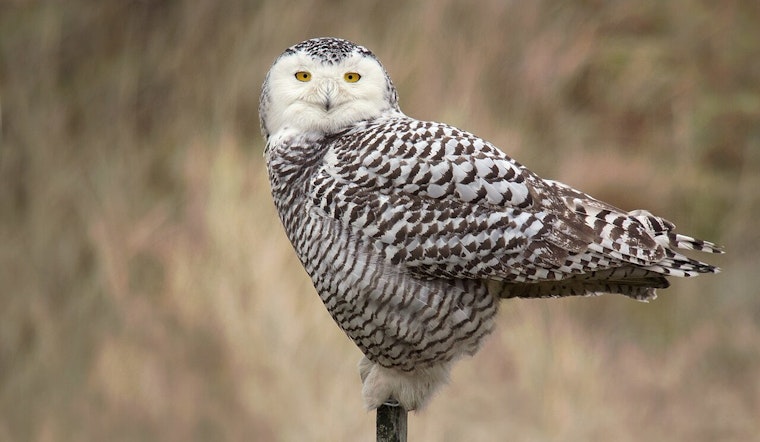
Early Saturday along Interstate 88 near DeKalb, a snowy owl with a badly injured wing was scooped up by a volunteer and rushed to wildlife rehab. The bird was later found to have an open fracture in its left humerus and was taken into surgery. Veterinarians say the juvenile owl is alert and eating, but the long-term prognosis is still up in the air as rehab staff keep close watch on its recovery.
How the rescue unfolded
A snowplow driver on I-88 first spotted the struggling owl and contacted Chicago Bird Collision Monitors, which passed the alert to Oaken Acres. Volunteer rescuer Ken Reinert arrived with a net and carrier, estimated it took about three minutes to secure the bird, then drove it to Oaken Acres before it was transferred for treatment, according to WTTW.
At DuPage Wildlife Conservation Center, staff immediately examined the owl. The center's lead veterinarian, Dr. Sarah Reich, diagnosed an open fracture to the left humerus and, in a social media update, said she decided on immediate surgery to cut the risk of infection. She noted that “performing immediate surgery is always risky as we generally want to make sure an animal is stable enough for prolonged anesthesia first,” a post that WTTW shared.
Why snowy owls are here and why they are vulnerable
Snowy owls are Arctic natives that occasionally irrupt into the lower 48 states in winter, pulling in birders and photographers to spots like Chicago’s lakefront, according to reporting by The Associated Press / Weather.com. Rehab centers caution that road collisions and secondary poisoning from rodenticide are frequent hazards for these seasonal visitors. DuPage Wildlife Conservation Center has seen similar cases in previous winters, including owls weakened by both poisoning and trauma, according to the center’s account.
Volunteer networks and what to do
The capture underscores how a slim but fast-moving chain of people can keep an injured bird alive: drivers who notice something is wrong, volunteer hotlines that field the calls, and local rehabbers who stabilize animals for transfer. Chicago Bird Collision Monitors runs a regional hotline, and volunteers like Reinert respond in the field, while Oaken Acres and other centers provide crucial first-stop care, as described by Chicago Bird Collision Monitors and by a recent Aurora University feature on internships at Oaken Acres. Local groups stress that anyone who finds an injured wild animal should contact a licensed rehabilitator or wildlife center for instructions instead of trying to handle the animal on their own.
One week after surgery, staff reported the owl was eating and showing plenty of “spunk,” though they warned it is still too soon to tell whether treatment will fully succeed. For now, the rescue stands as a reminder that a sharp-eyed plow driver, a few volunteers and a busy rehab center can give a roadside casualty a fighting chance.



,_Vlieland,_Netherlands.jpg)