

























































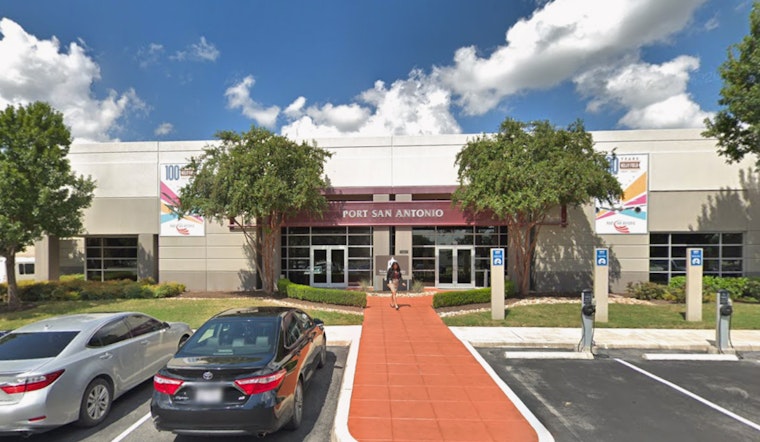
Port San Antonio is making a serious play to get flying cars off the drawing board and into the local skies, striking a three-year memorandum of understanding with Austin-based SkyGrid to build both a vertiport and the digital backbone that would manage self-flying air taxis at the Port's Tech Port campus. The agreement turns a cleared stretch of land near port headquarters into one of Texas' early test sites for electric vertical takeoff-and-landing aircraft and the software that will choreograph their movements. Local officials say that tying concrete, cables, and code together on the South Side could turn the area into a proving ground for future passenger and cargo flights.
What the agreement covers
According to the San Antonio Express-News, the memorandum calls for joint work on several fronts, including mapping and modeling the local airspace, drafting digital flight rules, assessing how cyber-resilient ground systems need to be, and designing routes that can plug into existing air traffic control. Port San Antonio president and CEO Jim Perschbach told the paper that “understanding the airspace and being able to map the airspace becomes vitally important” for self-flying aircraft, and he said the partnership could add a SkyGrid test site on port property. The Express-News reports that this is the first agreement of its kind for both organizations.
SkyGrid, Wisk and what they bring
SkyGrid develops software and sensor networks intended to create a high-fidelity digital twin of the operating environment so operators and controllers can see and manage autonomous traffic in real time. In a June press release, Wisk Aero said SkyGrid will support airspace integration and help enable automated flight rules, adding, “To unlock the full potential of Advanced Air Mobility, we must also have advanced airspace.” Company leaders say proving that their systems can function inside a mixed civil, commercial and military environment would be a major validation for the technology.
Why Kelly Field matters
Port San Antonio promotes Kelly Field as an industrial airport with long runways, cargo capacity and an existing aerospace cluster that make it attractive for testing advanced aircraft and systems. Port materials highlight a 1,900-acre Tech Port campus and hundreds of air-served acres at Kelly Field, along with workforce initiatives and build-to-suit infrastructure tailored to aviation projects. Officials say the surrounding mix of urban, suburban and rural airspace is exactly why the site works as a real-world proving ground instead of a purely theoretical lab.
Funding and next steps
The port has committed about $33.9 million for site upgrades, a combination of port money and state and federal grants, as it prepares the vertiport area, the Express-News reports. The paper describes the future terminal and vertiport site as roughly 120 acres that have already been cleared and graded, and it notes that taxiway extensions and an access road are expected to wrap up by the end of the year. Local coverage has also pointed to earlier federal funding for Kelly Field, including an FAA award of about $2.8 million for a consolidated facilities terminal at the airport, KSAT reported last year.
What’s next for testing and regulation
Officials caution that the clock for passenger-carrying eVTOL flights will ultimately be set by Federal Aviation Administration certification timelines, so early activity at the port may feature hybrid-electric aircraft or piloted demonstrators rather than fully autonomous air taxis. Wisk has said it is working through type-certification steps for its Generation-6 aircraft, and SkyGrid and port leaders expect the three-year memorandum to help shape route design, automation rules and cybersecurity standards that other vertiport projects could borrow. If the tests and regulatory work line up, San Antonio could find itself marketed as a template for advanced air mobility projects far beyond the South Side.



