

























































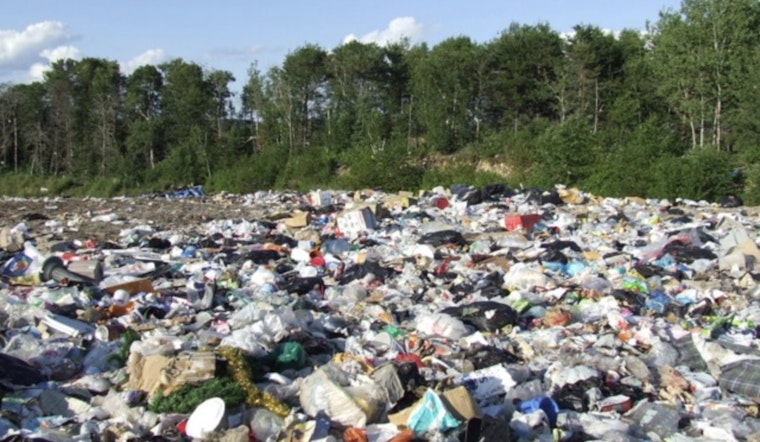
Wake County leaders are quietly facing a pressing challenge: finding a place for hundreds of thousands of tons of trash each year once the South Wake Landfill reaches capacity in the 2040s. Their decision could impact monthly bills, air quality, and traffic patterns for decades. With the clock ticking, consultants have begun evaluating potential sites and weighing three main options: building a new local landfill, exporting waste out of the county, or investing in waste-to-energy technology.
At a recent briefing to the Board of Commissioners, consultants walked through an initial map screen that hunted for large parcels outside town limits, away from airports and major drinking water supplies, and with at least 400 acres in one chunk. They told commissioners they did not expect to find any qualifying sites, yet they turned up a small set of possibilities anyway, according to WRAL. County staff and engineers from CDM Smith stressed that any candidate site will need extensive technical vetting and that nearby towns and neighborhoods are almost guaranteed to put up a political fight.
The South Wake Landfill, on the Apex-Holly Springs line, opened in 2008 and, based on current disposal rates and modeling, is expected to hit capacity sometime between 2040 and 2045. That end date, combined with recent odor complaints and a series of operational tweaks, pushed the county to launch its "Beyond the South Wake Landfill" study and broaden public outreach, according to reporting by Holly Springs Update.
What the consultants showed about costs
During the briefing, the consulting team rolled out life cycle cost comparisons that put a new county owned landfill at about $250 per household per year. Hauling Wake County’s waste to regional landfills elsewhere in the state came in a notch higher at about $266 per household. Two different waste to energy setups landed at roughly $311 and $331 per household, depending on plant size and financial assumptions. For context, the current average Wake County household bill for trash, recycling and yard waste is about $248 a year, according to The News & Observer.
How waste to energy stacks up
The environmental tradeoffs are not as simple as “burning is bad, burying is good.” Life cycle assessments show that when modern pollution controls are factored in, and when the electricity from a waste to energy plant is credited as displacing fossil fuel power, the overall air pollution burden can be lower than trucking garbage long distances to regional landfills in some impact categories. The results, though, depend heavily on assumptions about how much landfill gas gets captured, how energy credits are handled, and how many truck miles are required. Peer reviewed research has documented the same sensitivities, including work in Environmental Science & Technology and a comparative review in Sustainability. On top of the science, state permitting rules, utility interconnection requirements and the way energy sales or credits are structured would all shape whether waste to energy pencils out, with the North Carolina General Statutes setting key boundaries.
Next steps and public input
County staff told commissioners that the technical evaluations and site screening work should take roughly three to six months. Officials plan to stand up a dedicated county webpage and roll out more outreach tools so residents can react in real time as options are refined, according to The News & Observer. Before they take the conversation to the broader public through forums and surveys later this year, the county expects to meet first with municipal partners and advisory committees that have been watching the landfill issue up close.
The board now has a classic local-government dilemma on its hands. A new county landfill looks cheaper on paper, but it would concentrate truck traffic and odor worries near one community. Shipping waste to regional landfills spreads the impacts out, at the cost of more transportation, more dependency on outside operators and slightly higher bills. Waste to energy is the priciest option and would require complex permits and contract negotiations, yet may reduce some pollution impacts under certain scenarios. Over the coming months, residents can expect to see more modeling, more talks with towns and plenty of public comment as Wake County works toward a long term trash plan that most people can live with, even if nobody is exactly thrilled about it.




