

























































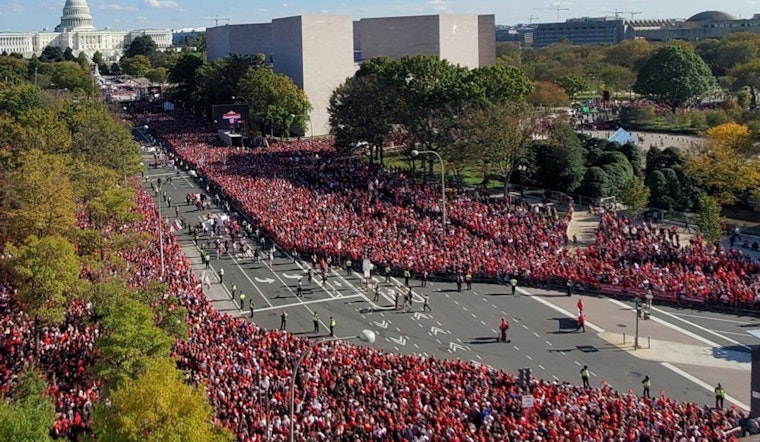
Pennsylvania Avenue, the 1.2-mile ceremonial corridor that connects the White House and the U.S. Capitol, is on the verge of one of the biggest overhauls Washington has seen since the 1970s. Federal planners are shifting from big-picture vision to actual designs this spring, and the commission in charge could end up reshaping how tourists, office workers and protesters move through downtown. Everything is on the table, from retail and bike lanes to how the avenue handles parades and major national events.
NCPC and the New Plan
At the center of the effort is the National Capital Planning Commission, which has brought on DAVID RUBEN Land Collective and HR&A Advisors to create a New Pennsylvania Avenue Plan that would replace the aging 1974 framework and update parks, plazas and basic infrastructure, according to NCPC. The agency has floated three early concepts, called Urban Capital, Linear Green and Civic Stage, as ways to "right-size" the street and boost everyday use. NCPC says the project will produce both a public-space master plan and an implementation program that covers long-term upkeep and events.
Politics On The Commission
This is Washington, so none of it is happening in a political vacuum. The commission now includes several presidential appointees who ultimately answer to the White House, and local reporting suggests that shift has changed the tone of design debates. Critics and preservation advocates have warned that closer ties to the administration could favor more classical or historicist design preferences and put extra focus on high-profile projects. As reported by The Washington Post, recent moves on membership and leadership have drawn new scrutiny to how the review process works.
From Market Square To A Civic Stage
Early design sketches carve the avenue into a series of "urban rooms" with different personalities, all with a stronger focus on people instead of cars. The western end is imagined as more park-like, the middle section nicknamed "Market Square" is geared toward retail and amenities, and the stretch near the Capitol becomes a more formal ceremonial promenade. The concepts call for wider sidewalks, added bike and transit lanes, and flexible spaces that could handle everything from farmers markets to national parades. According to NCPC, those 2022 concepts are steering the current design work as consultants sharpen alternatives for public review.
A Test Run And A Long Timeline
At a recent commission meeting, the project lead pointed to the Indy Grand Prix that ran along Pennsylvania Avenue this summer, noting that it required an executive order to bypass strict rules on signage and branding. It was a real-world reminder of the regulatory tangle this plan is trying to unwind. Project consultants are slated to present new designs in April, and NCPC staff expects a final review in early 2027 before any construction could start, as reported by Axios. That schedule means downtown D.C. will be working through design meetings, public comments and permitting for much of the year ahead.
Why D.C. Will Be Watching
Whatever emerges from the process, the changes will ripple through daily life for people and businesses on and around Pennsylvania Avenue, affecting everything from delivery routes and transit flow to where street vendors set up and cafés spill onto the sidewalk. The commission’s recent role in high-profile cases has already shown how its calls can reshape the city, including reviews of major stadium proposals and White House renovation projects. As noted by the Associated Press, NCPC’s authority and the political spotlight it attracts ensure that revamping Pennsylvania Avenue will be both an urban-design test case and a full-on Washington story.





