

























































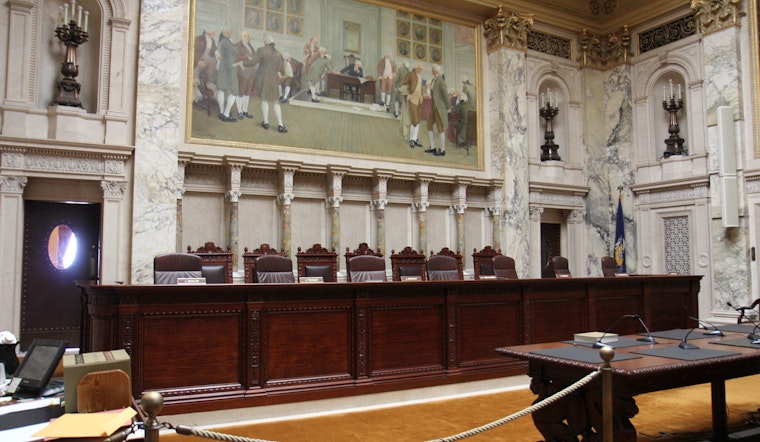
Former Trump attorney Jim Troupis is asking the Wisconsin Supreme Court to sideline two of its own, urging that Justices Jill Karofsky and Rebecca Dallet be disqualified from a petition tied to the state’s fake electors litigation. In new filings, he argues that their public comments during the post‑2020 legal battles show a prejudgment that, he says, could taint any review. It is the latest procedural twist in a case already packed with felony charges and bruising courtroom skirmishes.
According to the Milwaukee Journal Sentinel, Troupis filed his petition on Feb. 24, 2026. He is asking the high court to remove Karofsky and Dallet from considering a request for review of whether a Dane County order was properly authored. The filing highlights remarks the justices made during 2020 arguments, including Karofsky’s comment that the Trump campaign’s challenge “smacks of racism,” and says those past statements create a reasonable appearance of bias.
State prosecutors charged Troupis, attorney Kenneth Chesebro and operative Mike Roman in June 2024 with multiple felony forgery counts tied to efforts to assemble and circulate so‑called alternate elector certificates. A Dane County judge has already refused earlier attempts to toss the case. The Associated Press has detailed the charges and the rulings that kept the prosecution alive.
The new petition also revives an accusation about who really wrote an August order by Dane County Circuit Judge John Hyland denying dismissal. Troupis’ lawyers again claim that retired Judge Frank Remington largely drafted the decision, attaching a forensic linguistics analysis and other materials to bolster that theory. Hyland has rejected the ghostwriting allegation and maintains that only he and his staff drafted the order, a point reported by the Wisconsin Law Journal.
Why the Supreme Court?
The petition asks Wisconsin’s high court to untangle two procedural knots: whether the Court of Appeals erred by denying review without explanation, and whether the ghostwriting allegation undercuts the fairness of Hyland’s order. The Wisconsin Supreme Court has discretion to take original actions or send cases back down, and Troupis is asking the justices either to remand the matter for an evidentiary hearing or to assign it to a different panel, consistent with rules and practice on the state court docket, according to the Wisconsin Court System.
What happens next
The Wisconsin Supreme Court will decide whether to accept the petition at all, and as of the filing date it had set no public hearing or deadline. If the court says no, the defense can keep pressing its recusal and misconduct arguments in lower courts. If the court agrees to step in, the justices will have to rule on whether Karofsky and Dallet must step aside or whether the petition should simply be denied, according to The Associated Press.
Legal stakes
A decision forcing recusals would change which justices might later review key rulings and would highlight the ongoing tension between judicial ethics rules and high‑stakes election litigation. Troupis’ central role in the fake electors effort has already had ripple effects beyond the criminal case, since he was temporarily suspended from a state Judicial Conduct Advisory Committee last year, showing how tightly the prosecutions and judicial oversight fights are now intertwined, according to Wisconsin Public Radio.
For the moment, the latest filing simply opens another front in a long‑running, high‑profile battle over the 2020 election challenges. The state’s top court will have to decide whether claims of bias and alleged outside authorship are enough to knock two of its own off the case, while the Milwaukee Journal Sentinel continues to track each development as the petition moves through the system.





