

























































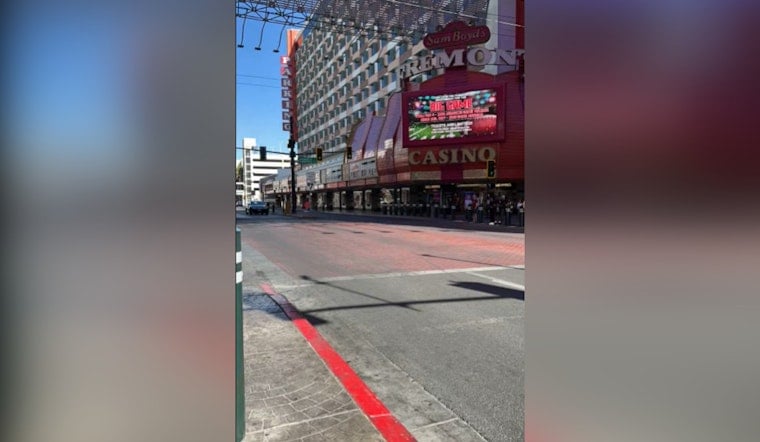
Las Vegas is getting ready to let artificial intelligence babysit one of its busiest party corridors. City leaders on Monday moved forward with a plan to install 16 AI-powered “smart signals” along the five-block Fremont Street Experience that will detect pedestrians and tweak traffic signals in real time. The pilot is part of the city’s Vision Zero push, funded by a $1.4 million federal grant, and Mayor Shelley Berkley said the system could eventually spread citywide if it actually cuts crashes. Downtown businesses and walking advocates, meanwhile, want safer streets without turning Fremont into a full-time surveillance zone.
As reported by KSNV, the City Council has signed off on installing more than a dozen smart signals along the Fremont corridor. According to KSNV, the pilot covers 16 intersections that will detect people on foot and automatically adjust traffic flow, and the Fremont Street Experience pulls in about 26 million visitors a year. The station also noted that U.S. Rep. Dina Titus helped land the $1.4 million award paying for the project.
Why Fremont Street
The city picked the Fremont Street Experience because of the sheer volume of people walking through and the frequent conflicts between pedestrians and vehicles, according to a post from the City of Las Vegas. Staff have folded the pilot into the broader Vision Zero program, which aims to wipe out traffic deaths and serious injuries. Officials say this stretch of downtown will act as a live lab, generating data to fine-tune signal timing and flag engineering fixes that could come later.
How the Signals Will Work
Edge-based cameras and sensors will look for people waiting in crosswalks and feed that information to traffic controllers, which can then extend walk times or change flashing beacons at unprotected crossings. The idea is to send pedestrian counts and clearance times to the signals without recording or storing video, a point city engineers have stressed to calm privacy worries. FOX5 previously reported that the sensors would “talk” to traffic signals to trigger those real-time adjustments.
Accessibility and Privacy
An earlier Las Vegas Review-Journal report noted the project could come with an inclusive push-button option so people who need extra time can use a government-issued card to trigger longer walk intervals. The paper also described how adaptive timing and flasher changes would combine to create safer windows for crossing. City officials say the top priority for the pilot is generating usable data that can guide future engineering work and policy decisions downtown.
The rollout is coming as the region confronts a troubling run of pedestrian crashes. KTNV reported that roughly 82 people have been hit by vehicles across the LVMPD jurisdiction so far this year, with at least six of those crashes fatal. Supporters argue the technology could dial down risky encounters at crowded crossings, while critics counter that smarter signals need to be paired with clearer crosswalks and consistent enforcement.
Las Vegas now joins a roster of U.S. cities testing SMART grant-funded, AI-enabled traffic systems as part of a wider federal push to experiment with sensors, connected signals and data-driven safety tools. Transportation analysts say these pilots can deliver quick operational improvements and the long-term datasets engineers need to rethink street design, though results depend heavily on equipment quality, careful calibration and whether the community actually buys in. Smart Cities Dive details the federal program and similar trials around the country.
What’s Next
City staff say the council has cleared the pilot to move ahead into procurement, and officials signaled they hope to have the system installed and under test later this year. That schedule has been echoed by downtown partners on social media, including a post from the Downtown Vegas Alliance. If everything stays on track, Fremont merchants and visitors will get an early look at whether AI-driven signals can tame dangerous crossings without eroding privacy or public trust.





