

























































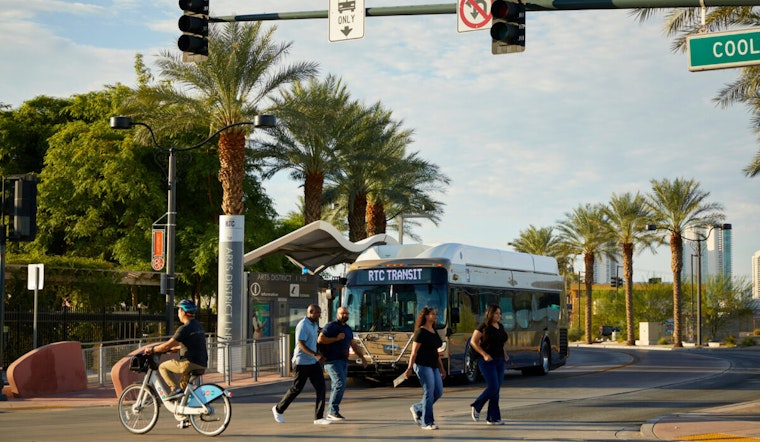
The Regional Transportation Commission of Southern Nevada is shifting its Safe Streets for All action plan from talk to trial, moving out of the outreach and mapping phase and into short-term, on-street experiments across the Las Vegas Valley. The change in strategy comes as fatal and serious crashes remain a stubborn problem in Clark County, with local reporting showing nearly 240 people killed in crashes last year. Over the coming months, the agency plans to roll out temporary street fixes meant to slow drivers and better protect people walking, biking and riding transit, while it tracks whether those tweaks actually reduce crashes.
How the tests will work
The testing phase revolves around temporary "demonstration projects" such as portable curb extensions, speed tables, protected bike lanes and trial roundabouts. All of it is designed to be movable or removable if it does not improve safety. RTC officials say the goal is to show clear, measurable safety gains before partner agencies commit to permanent redesigns or hunt for construction funding, and the work will stretch across local cities and some rural corridors. As outlined by RTC, the demonstrations will be paired with community walk audits and opportunities for public feedback.
What residents told planners
Planners say roughly 7,000 residents weighed in through surveys, walk audits and an online map where people could drop pins on locations that felt unsafe. About 65% of respondents identified speeding, red light running, distracted driving and impairment as the biggest dangers on local roads, and planners report that the pinned hot spots lined up closely with official crash data. Those responses shaped the RTC's "Safer Streets" priority network and helped decide where to try out the temporary changes, according to KSNV.
Officials point to aggressive driving
Andrew Kjellman, senior director of the RTC's metropolitan planning office, said, "Our community recognizes what the number one transportation challenge is for roadway safety, and that is aggressive and dangerous driving." He also cautioned that turning any of these pilot projects into permanent street redesigns will require more planning, full design work and construction funding, as reported by KSNV.
Where crashes cluster
Las Vegas police compile monthly lists of the valley's most crash-prone intersections, and downtown corridors such as Charleston Boulevard at Eastern have repeatedly landed among the worst. Metro's hot spot data has been folded into the RTC's mapping effort to help decide which corridors get the first demonstrations, according to KTNV.
Funding and next steps
The action plan launched with a federal Safe Streets for All grant. The RTC previously received $1.68 million in federal funding to build the plan, and local matching dollars brought the startup total to roughly $2 million. Officials say the final plan is expected to produce a prioritized project list that local partners can use to chase additional federal construction grants, and the RTC will evaluate each temporary treatment for measurable safety improvements before recommending that it become permanent, per RTC.
Residents can check out proposed test locations, sign up for walk audits and track upcoming events at Let's Go Safely. RTC officials say demonstrations will begin in the coming months, and that public feedback during these pilots will help determine which changes stick around for the long haul.




