

























































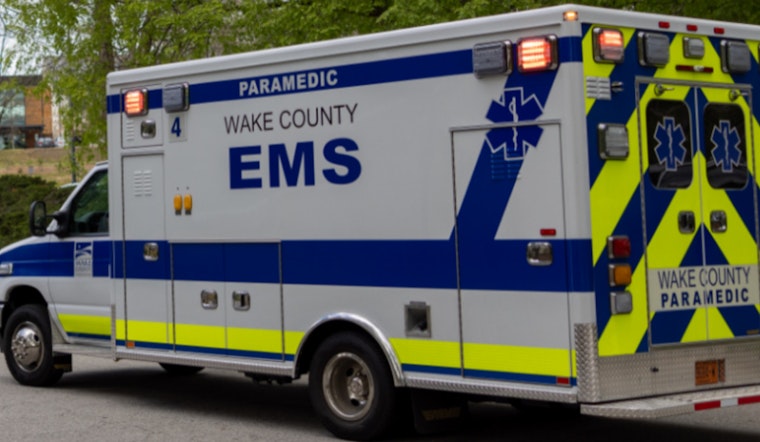
Wake 911 Shake-Up: Sickest Callers Cut the Line For EMS Help
Wake County EMS is overhauling how 911 calls are handled so the sickest patients jump to the front of the line instead of waiting behind less urgent emergencies. Starting in March 2026, the county will phase in a phone-based triage system where medically trained dispatchers size up callers before deciding who gets an ambulance and who is routed to a nurse for help over the phone.
According to WRAL, the new setup will sort calls into four priority levels. Level 1 covers the most critical, life-threatening cases. Level 4 callers, on the other hand, will be transferred to a nurse navigator for telehealth-style support. Levels 2 and 3 will still get ambulances, but those responses might be delayed a few extra minutes so the worst emergencies get crews first. “We need a better system, where if the fifth person who calls is the most sick, they get the quickest, most appropriate response,” Wake EMS Director Jonathan Studnek told WRAL.
How the triage will work
Dispatchers certified in medical triage will walk callers through a short, structured script aimed at spotting anything immediately life threatening and matching the right kind of help to the problem. That quick clinical checkup happens before anyone is sent racing out of a station.
Callers who fall into the lower-acuity bucket will be handed off to a nurse-navigation team. Those nurses can provide telehealth consultations, arrange transport to urgent care instead of an emergency department, or give step-by-step self-care instructions when a home remedy is enough. County leaders say the goal is to keep people who do not need emergency-department level treatment out of already crowded EDs and to keep ambulances free for truly time-critical calls.
Why county leaders support it
Officials say the change is driven by rising 911 call volumes and growing concern about the risks that come with frequent high-speed responses. Efforts to limit lights-and-sirens use, along with plans to add more EMS positions and modernize stations, are already on the books as part of a broader strategy.
Similar dispatch tweaks elsewhere in North Carolina also helped shape the plan, including a paramedic-first dispatch model highlighted by EMS1. County leaders are framing the new approach as another step in that same direction: getting the right level of care to the right caller at the right time, instead of treating every 911 ring as the same kind of emergency.
Community meetings and next steps
To sell the community on the changes, Wake County EMS plans to host seven public meetings across the county next month, where residents can hear exactly how the triage will work and press staff with questions and concerns. As reported by WRAL, specific times and locations will be announced soon, tied to the phased rollout of the new system.
County officials say they will closely track response times, patient outcomes and other clinical data as the program ramps up. If the numbers point to problems, they insist they are ready to tweak the protocols rather than lock in a system that is not working as advertised.




