

























































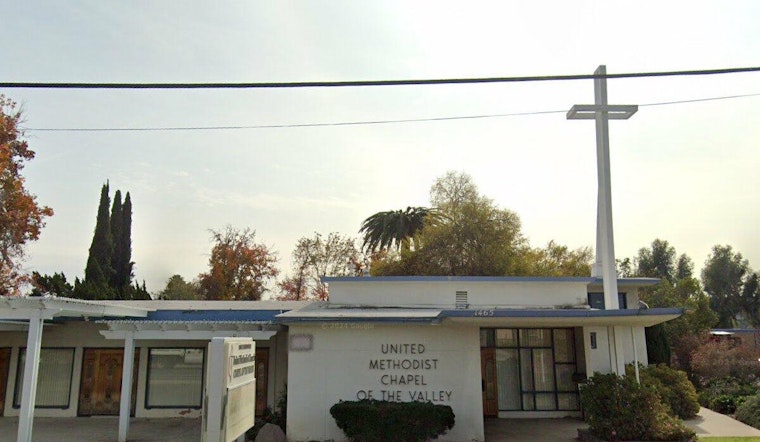
Most health inspection closures are straightforward — a restaurant gets shut down, the owner scrambles to fix things, and life moves on. The closure of the kitchen at Wesley United Methodist Church on El Cajon Boulevard is a little more complicated than that. This isn't a restaurant. It's a church-based community services operation that feeds people who have nowhere else to go. And as of March 26, 2026, the San Diego County Department of Environmental Health and Quality has ordered it closed for a major vermin violation.
What the Inspection Found
The routine March 26 inspection produced three violations, per SD Food Info: a major vermin finding — the kind that triggers mandatory closure under county protocols — alongside a minor food safety certification issue and a floors, walls, and ceilings condition listed as out of compliance. The vermin finding is what closed the doors. Under county inspection rules, a major vermin violation constitutes an imminent health hazard that requires immediate cessation of food operations until the infestation is resolved and a clean reinspection is completed.
Worth noting: inspectors attempted to reach the facility on March 10, 2026, but found no access. A similar pattern played out in 2025 — the county attempted routine inspections on March 25 twice, both times finding no access, before finally completing a successful routine inspection on March 26, 2025. That inspection, exactly one year prior, produced a 92 score and an "A" grade but flagged handwashing facilities, food contact surfaces, nonfood contact surfaces, warewashing facilities, toilet facilities, and floors and ceilings as out of compliance or needing attention. The facility has been racking up infrastructure-related findings consistently — a pattern that points more to resource constraints than indifference.
Who This Closure Actually Affects
Wesley United Methodist Church at 5380 El Cajon Boulevard is home to the Wesley Community Services Center, a nonprofit that operates out of the church campus in San Diego's Mid-City neighborhood near Talmadge. The Co-Op Cafe, which operates under the church's food service permit, serves prepared hot meals three times a week — Monday, Wednesday, and Friday — to people experiencing poverty, homelessness, and food insecurity in the 92115 zip code and surrounding areas, according to county social services listings at the San Diego Network of Care. The same campus operates a Patio Pantry twice a week for food distribution to anyone in need. Showers, clothing, hygiene products, and patient advocacy services — including blood pressure monitoring from student nurses — round out what the center offers.
A Yelp reviewer who visited the church years ago put it simply: "This church blesses the poor. Feeds them, clothes them." The Wesley Community Services Center's own mission, as described on Idealist, is to "build a stronger community through coordination of services between churches and community organizations." The people it serves are, by definition, those with the fewest backup options when a food source disappears. Catholic Charities also uses the 5380 El Cajon address as a site for its Emergency Food Assistance Program, according to Episcopal Community Services. This is not a casual food operation — it's woven into the safety net fabric of San Diego's Mid-City.
The Tension This Creates
Health inspections apply to church kitchens the same way they apply to restaurants. The county has an obligation to protect the public regardless of who is being served or how charitable the operation is — and honestly, that principle holds even more firmly when the people being served are vulnerable. The vermin finding here is legitimate and requires a response. At the same time, it's hard not to notice that a kitchen serving the unhoused and food-insecure is being asked to meet the same infrastructure standards as a commercial restaurant, often with volunteer labor, donated resources, and no revenue stream to fund capital improvements. The recurring floors, walls, and ceilings violations across multiple inspections suggest a building that needs physical investment — the kind that is easier for a restaurant to fund than a nonprofit church ministry.
None of that excuses a pest problem. But it does put the closure in context. Hoodline has reached out to Wesley Community Services Center for comment on the closure, the nature of the vermin finding, and what plans are in place to serve clients while the kitchen is closed. This story will be updated if a response is received.
The facility's current inspection status can be checked at SD Food Info. The Wesley Community Services Center can be reached at (619) 354-8094.



