

























































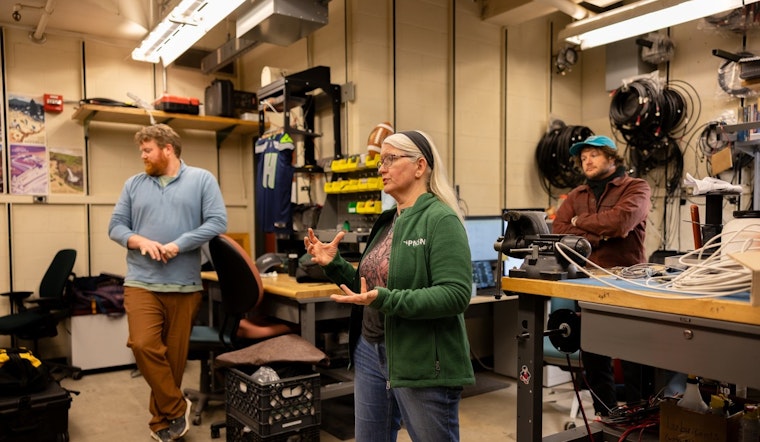
Auburn’s emergency management team has been talking through some worst-case scenarios, sitting down with regional seismologists this week to look at what a major Washington earthquake could mean for the city and what neighbors should be doing now. Auburn Magazine followed up on March 20, 2026, with a short Q&A that tackles the big questions: when a large quake might hit, whether anyone would get a heads-up, and how households can brace for it. The city also shared photos from the meeting on its official Facebook page the same day.
What the city shared
Auburn Emergency Management said staff met with the Pacific Northwest Seismic Network and then passed along photos and takeaways for residents, according to a post by City of Auburn - Government. The post directs readers to the city’s Auburn Magazine, where a plain-language Q&A breaks down when a large Washington earthquake could occur and how much warning people can realistically expect. The piece, available on the city’s site, is framed as a practical primer meant to nudge households from "I keep meaning to prepare" to actually getting ready.
Three quake sources to understand
The meeting and magazine article sort the region’s seismic risk into three main source zones: the offshore Cascadia megathrust, deeper intraslab quakes in the Juan de Fuca plate beneath the Sound, and shallower crustal faults, as outlined by the Pacific Northwest Seismic Network. Research cited in local mitigation planning notes that Cascadia is capable of full-margin ruptures near magnitude 9, with paleoseismic records suggesting multi-century spacing that often gets summarized as roughly 500 years on average. The Suquamish Tribe’s hazard mitigation plan echoes that deep Juan de Fuca events can generate M7-class shaking on roughly 30 to 50 year timescales, while crustal faults are also capable of M7-level quakes but with longer and less regular recurrence intervals across the Puget Sound region.
What early warning can — and can’t — do
The Auburn Q&A tackles a question that comes up every time the ground rattles: will there be any notice before the strong shaking hits. Earthquake early-warning systems such as ShakeAlert can send out seconds to, in some cases, up to minutes of advance notice to phones and automated systems. That is just enough time to Drop, Cover and Hold On or to slow trains and other critical operations, but it is not prediction and it offers little or no warning for people who are right on top of the rupture. The federal ShakeAlert overview and partner guidance explain that actual warning time depends on where a quake starts relative to both the sensors and your location, which means coastal communities in the path of a Cascadia rupture and those near a fault may get only minimal notice. Officials stress that the system is best understood as a last-second protective tool, not a long-range alarm.
How Auburn recommends preparing
Auburn’s emergency pages and magazine direct residents to city resources, local hazard mitigation planning documents and Alert King County for official warnings and updates, according to the city’s preparedness materials. Statewide guidance that grew out of Cascadia earthquake exercises has shifted public messaging toward being "2 Weeks Ready," encouraging households to plan for roughly 14 days of self-sufficiency in a worst-case event. City officials told reporters that the goal with the recent seismology meeting and the Auburn Magazine Q&A is to give neighbors a clear snapshot of the risks along with simple action steps: secure heavy items, make a family communication and reunification plan, sign up for alerts, and pull together basic food, water and medication supplies that fit each household’s needs.
Bottom line, Auburn’s emergency team is amplifying what regional scientists have been saying for years: Cascadia quakes can be huge but are relatively rare, deep and crustal quakes strike more often, and early warning provides seconds, not days. The city is betting that if residents understand that tradeoff, they will use those seconds wisely by practicing Drop, Cover and Hold On and by building a modest emergency stockpile before the next big shake shows up.



