

























































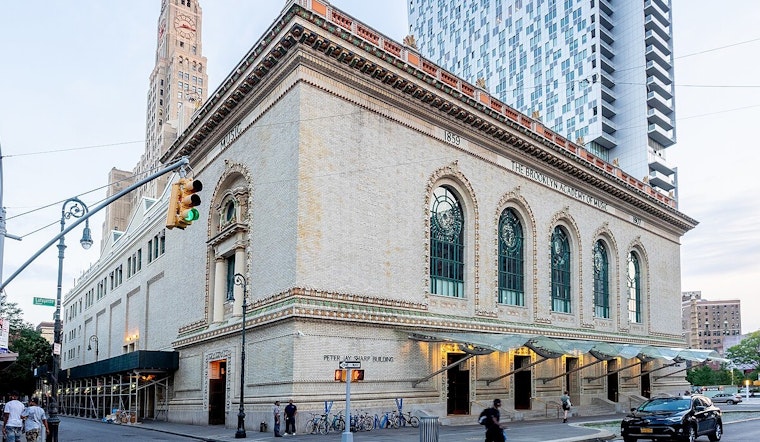
The Brooklyn Academy of Music is turning to a familiar face to calm some choppy waters. On Thursday, March 19, Tamara McCaw was named president of the storied Fort Greene institution, returning a veteran Brooklyn arts player to the top job after a spell of leadership turnover and executive churn.
McCaw, a long-time presence in the borough's cultural circles, moves from an interim role into the permanent post as BAM tries to steady operations and rebuild audience momentum. Her elevation signals the board's preference for someone who already speaks the institution's language as it works to firm up programming and fundraising.
According to The New York Times, BAM's board of trustees selected McCaw from roughly 60 applicants and announced her appointment on March 19, 2026. The paper reports that she has said she intends to stay longer than the organization's recent presidents, a pointed promise after a year widely described as unstable at the top. Board chair Diane L. Max told the paper the trustees were "very happy with our strategic plan" as they made the decision. McCaw's hire follows an interim period after Gina Duncan departed in June 2025.
McCaw's roots and résumé
For longtime BAM watchers, McCaw is more of a comeback than a surprise. She previously worked at the organization from 1999 to 2016, including a stint as director of government and community affairs, and later co-founded the consultancy Public Assembly. BAM notes her long tenure in New York City's cultural sector and her close familiarity with the institution.
Her résumé also includes time at The Shed, where she served as the inaugural chief civic program officer and helped launch artist-facing civic programs, experience that has been documented in coverage of that organization's early initiatives. Taken together, her career sketches a profile of someone who knows how to work both inside major institutions and out in the neighborhood.
Finances and foot traffic
The New York Times reports that BAM's ticket revenue in 2025 was about $15.5 million and that the organization welcomed roughly 700,000 visitors that year. Those numbers underline both the scale of BAM's operation and the financial pressure on whoever sits in the president's chair.
It also clarifies the practical puzzle McCaw inherits: keeping ambitious programming on the calendar while balancing earned income with philanthropic support. Every decision about what goes onstage ripples into budgets, staffing and neighborhood impact.
What this could mean for Brooklyn
Local civic and arts leaders have framed McCaw's appointment as a move to protect BAM's status as a cultural anchor in Brooklyn. Coverage of BAM's 2025 Trailblazers Gala in the Brooklyn Eagle highlighted the institution's reach and board chair Diane L. Max's repeated public plea for philanthropic backing to sustain programming.
In that context, bringing in a leader who knows both BAM and the borough is being read by supporters as a strategic bet that hometown knowledge can help keep the stages full and the community work visible. McCaw steps into the role with a board-approved strategic plan and an immediate to-do list: shore up donor relations, stabilize senior staff and turn strategy into seasons that attract consistent audiences from Brooklyn and beyond.
Her deep ties to the institution and experience building civic-facing programs could give her leverage with funders and neighborhood partners. The coming year will show whether the return of a seasoned insider can turn institutional stability into measurable gains for BAM and for Fort Greene.





_(48228024996).jpg)