

























































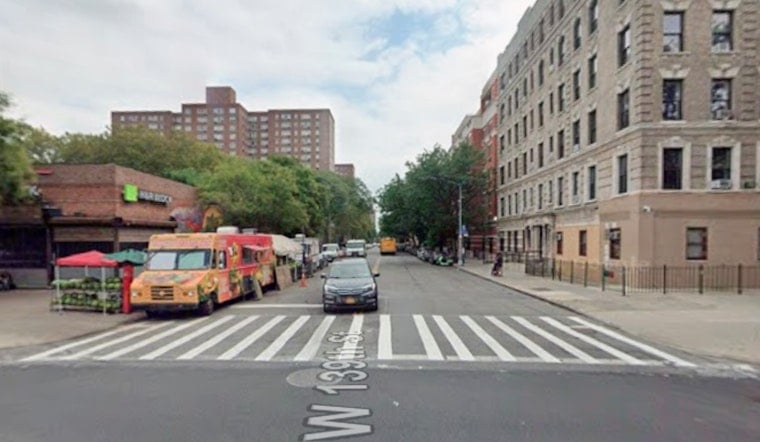
Donald Phinazee, the last surviving brother of Harlem rap legend Big L, is stepping in front of the camera in a new documentary titled The Parable of Lamont Coleman, saying it will finally address the questions that have hovered over his brother’s killing for more than twenty years. Lamont "Big L" Coleman was shot and killed on February 15, 1999, at West 139th Street and Lenox Avenue in Harlem, a crime that remains officially unsolved.
According to the New York Post, Donald says "everything will be answered" and that "my family's true story will be told, and it will be shocking." The Post frames the film as a first-person attempt to push back on years of rumor and street speculation about the murder and the family still living in its shadow.
Trailer offers first look
A short trailer for The Parable of Lamont Coleman has surfaced online and, per hiphop.de, it cuts between archival footage and on-camera reflections from Donald. Hiphop.de notes that the preview keeps things close to the vest, offering no clear information on distribution or a firm release date, so the eventual platform and full scope of the project are still anyone’s guess.
The unsolved case
Big L was killed in a drive-by shooting outside the doorway of 45 West 139th Street on February 15, 1999, with police saying he was struck multiple times. DNAinfo reported that childhood friend Gerald Woodley was arrested months later, but the Manhattan district attorney declined to bring murder charges, citing a lack of evidence. Woodley himself was fatally shot on West 139th Street in June 2016, a development that only deepened the sense of mystery that has long clung to that block.
Family toll
Donald presents the documentary as a way to confront what he describes as a family story marked by repeated violence and loss. Hiphop.de and other accounts note that Leroy "Big Lee" Phinazee, an older half-brother, was killed on the same streets in 2002, and the New York Post reports that another relative referred to in coverage as "Little Lee" was shot and killed in 2019, details the film appears poised to take head-on.
Legal and investigative status
Authorities at the time said investigators considered a possible retaliation motive connected to Lamont’s older brother, but prosecutors ultimately dropped the case against Woodley after concluding that gaps in witness testimony and physical evidence made a trial unlikely, according to contemporaneous reporting. That unresolved space, with an arrest but no conviction and the later killing of the onetime suspect, is exactly the tangle Donald suggests the documentary will attempt to sort out.
When and where
The filmmakers have not yet announced how or where the project will be released. The New York Post reports that the documentary, along with a planned soundtrack, is expected to arrive before the end of 2026, with screening plans to be revealed later. For now, the trailer is the only glimpse available, and some Harlem residents say they will reserve judgment until they see whether the film brings genuinely new facts to light or primarily offers a fresh interpretation of a familiar tragedy.
The story of Big L remains woven into Harlem’s fabric. Manhattan Community Board 10 formally backed co-naming a nearby corner “Lamont ‘Big L’ Coleman Way,” a civic nod to the rapper’s local impact. Donald’s film promises to fold that shared grief and pride into a fuller account of what happened on West 139th Street. Whether the documentary ultimately moves investigators or simply shifts the public conversation, the neighborhood that raised Lamont Coleman will almost certainly be the first to weigh in on its claims.





