

























































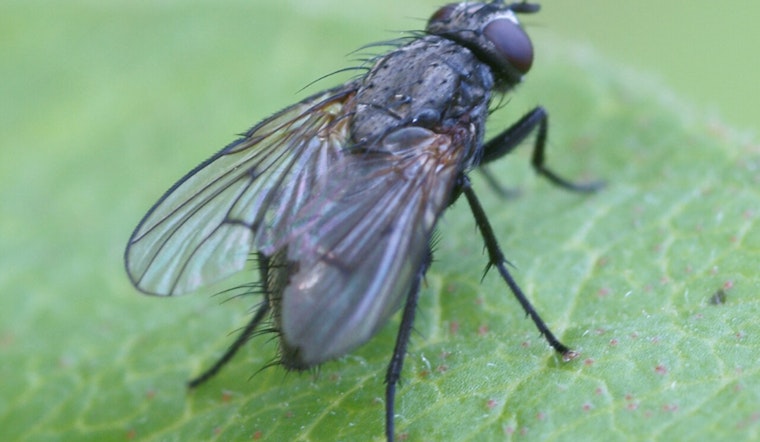
If your spring hikes in the foothills suddenly feel like running a tiny airborne gauntlet, you are not alone. An early-season surge of tiny, biting black flies has hit foothill neighborhoods across the San Gabriel Valley, leaving people and pets scratched and swatting. The swarms have been most noticeable near rivers, trails, and creekside parks from Altadena to Glendora, and officials say the outbreak arrived earlier than usual. Vector crews are already ramping up surveillance and control work as counts jump sharply.
Traps, counts, and what officials say
Anais Medina Diaz, communications director for the San Gabriel Valley Mosquito & Vector Control District, told LAist that surveillance traps that returned single-digit counts this time last year are now collecting numbers above 500, an unusual jump linked to warmer temperatures and higher-than-normal river flows. Black flies bite people and animals, often around the eyes and neck, and their bites can be painful, though local officials say the surge is a nuisance rather than a disease outbreak. For local context and immediate tips, the San Gabriel Valley Mosquito & Vector Control District posts identification and prevention guidance for foothill communities.
Why it's happening
District surveillance and operations reports show the spike is tied to unseasonably warm weather and strong river discharges that create ideal breeding habitat for black fly larvae in flowing water. The San Gabriel Valley MVCD's March board packet notes that black fly abundance exceeded the district’s action thresholds during recent surveillance weeks, prompting additional treatments and expanded weekly monitoring. Those conditions, combined with the flies' ability to travel miles from emergence sites, help explain why suburban streets and trails are seeing swarms now.
What vector crews are doing
Technicians are targeting larval sites in rivers and other public waterways with biological larvicides and expanding trap coverage where needed, according to district materials. The work focuses on places where flowing water lets black fly larvae develop; in backyard ponds and fountains, officials advise temporarily turning pumps off to interrupt breeding. Treatments are limited to larval habitat, so residents still need to rely on personal protection while crews work upstream.
How to protect yourself
Simple measures cut encounters: wear long, loose clothing and a hat, use head netting if you'll be near fast-flowing water, and apply an EPA-registered repellent. The Centers for Disease Control and Prevention recommends products with active ingredients such as DEET, picaridin, IR3535, or oil of lemon eucalyptus, which are effective against biting flies and other arthropods. Local guidance also suggests turning off decorative water features for at least 24 hours to reduce nearby breeding pockets; that step is especially useful in foothill neighborhoods.
Where to report sightings and get help
If you see heavy black fly activity or clustered bites, submit a service request to local vector control so crews can prioritize inspections and treatments; the Greater Los Angeles County Vector Control District and the Orange County Mosquito & Vector Control District publish online service-request forms for residents. For San Gabriel Valley–specific tips and reporting, contact the San Gabriel Valley Mosquito & Vector Control District for identification help and to log complaints with the district.





