

























































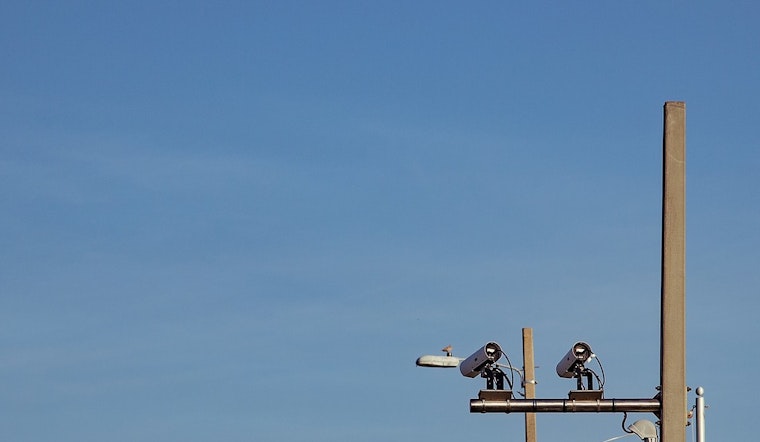
Brooksville’s latest political brawl is playing out over a network of license plate cameras that many residents did not know existed until after they were bolted into place along Hernando County roads.
County commissioners are now racing to build formal oversight for the Flock license plate readers that the sheriff’s office quietly rolled out. A public workshop is set for next Tuesday, March 10, where officials, residents and company representatives are expected to square off over a draft ordinance that would tighten local rules on how the cameras are used. The issue has split elected leaders, with some commissioners blasting the lack of upfront disclosure while the sheriff defends the system as a crucial crime-fighting tool.
Commissioner Ryan Amsler is leading the charge. He has introduced an ordinance that would force the Board of County Commissione rs to approve any future license plate readers on county property and would order a full review of the systems already in place, according to Hernando Sun. Amsler has told colleagues he backs law enforcement but wants clear protections for constitutional rights and stronger transparency around how the technology is deployed.
Local coverage has reported that the sheriff’s office has installed more than 40 Flock cameras around the county, and the sheriff has publicly defended them as investigative tools to help track stolen cars, locate missing people and identify suspects, according to WTSP. The Atlas of Surveillance also lists Hernando County as having Flock brand automated license plate readers installed in 2024.
The county’s meeting calendar and staff packet show a public workshop scheduled for next Tuesday at 5:00 p.m. in the John Law Ayers Commission Chambers at 20 N. Main Street, and the company has said it will send representatives. The meeting materials are posted on the county’s Legistar system, and local outlets have already teed up the coming fight. For detailed background, see Hernando County meeting materials and coverage in R News.
National Flock Backlash Creeps Into Hernando
The local showdown is part of a bigger national rethink. NPR has reported that at least 30 communities around the country have either turned off Flock cameras or ended contracts altogether amid concerns about broad data access and the potential for immigration-related searches.
The controversy has had ripple effects in the private sector, too. A planned integration between Ring and Flock was shelved as scrutiny of camera-to-police partnerships ramped up, according to Biometric Update.
County Lawyers Pick Through the Fine Print
Behind the scenes, Hernando officials are wrestling with what state law already says about automated license plate recognition and what local rules they are allowed to add on top.
Florida law permits automated plate readers in certain public rights of way and creates narrow exemptions for ALPR data while also spelling out how long it can be kept and when it must be disclosed under Florida Statute §316.0777. The statute lays out the specific retention and records-exemption rules. County leaders say a new ordinance could layer extra transparency, auditing and approval requirements onto that statewide framework, ideas that have surfaced in recent commission discussions and in official agenda materials. For the statute itself, see Florida Statute §316.0777, and for local context see the county’s meeting materials.
Draft language circulated by commissioners would require a complete inventory of every ALPR system operating in the county within 90 days and would cut off any system after 180 days unless the board votes to keep it running, a timeline described in local reporting. Residents and privacy advocates quoted in that coverage argue that audits and tight data-sharing controls should be in place before anyone talks about expanding the network. For details on the proposed deadlines and public reaction, see R News.
Next Tuesday’s workshop will be an early test of whether county commissioners can assert new oversight over surveillance tools that the sheriff’s office already put on the streets, and whether Hernando will join the growing list of communities that are reining in or walking away from Flock. Commissioners say they are hunting for a middle ground that preserves legitimate public safety benefits without tossing residents’ expectations of privacy out the window.




.jpg)