

























































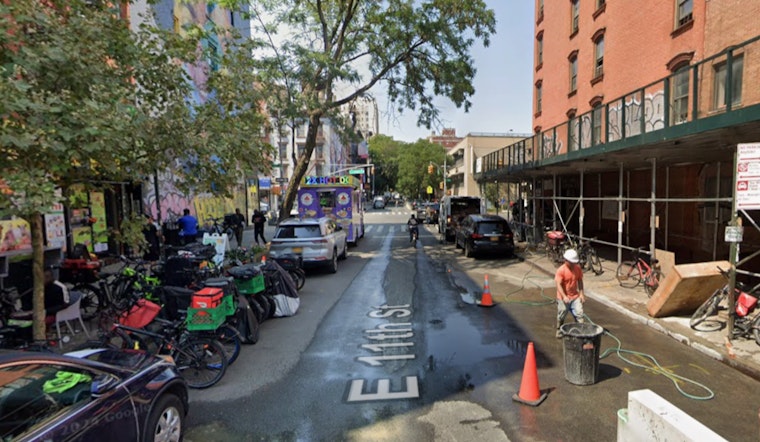
On Thursday, Councilmember Zohran Mamdani opted for a scrub-down instead of a crackdown at a long-standing delivery-worker hangout on East 11th Street, choosing sanitation crews over NYPD bike seizures. The stretch near First Avenue and the Madina Masjid doubles as an informal base for hundreds of deliveristas, many of them immigrant and Muslim, who use the block to pray, grab food and recharge between shifts. This time, sanitation workers moved through the rows of parked e-bikes to clear trash and debris while NYPD community-affairs officers were on hand but not running an enforcement sweep. It was a clear shift from how City Hall has previously responded when neighbors complain about these delivery-worker hubs.
According to Streetsblog, the city had posted signs warning workers to move their bikes and scheduled a Department of Sanitation cleanup for March 26. The NYPD told Streetsblog that "Sanitation is scheduled to respond and clean the area" and that "There are no plans to seize bikes." That decision followed a weekend New York Post item that described the corner by the mosque as a "trash-strewn junkyard," the kind of tabloid hit that has previously helped trigger police action rather than a cleanup crew.
Police sweeps followed tabloid coverage
The soft-touch approach is a notable contrast to what has happened after similar headlines. Local outlet EV Grieve chronicled Post-linked sweeps last July, as well as an Aug. 28, 2025 operation that ended with officers seizing more than two dozen bikes. Those past crackdowns left delivery workers scrambling to get their vehicles back and fueled criticism that media alarmism, not a coherent city policy, was steering enforcement on the block.
A budgeted fix, for now
City officials are now talking up infrastructure instead of impounds. Budget coverage in Streetsblog notes that Mayor Mamdani's preliminary plan includes $25 million to build secure bike parking. Separately, the Department of Transportation had already tapped Tranzito to roll out an initial network of 500 secure locations. As NYC DOT describes it, the program will mix smaller lockers with larger hubs that can hold e-bikes and potentially provide charging, although advocates say the scale is modest compared with what workers actually need.
Advocates say apps must do more
Worker advocates welcomed the decision to send in sanitation instead of the tow trucks, but they are quick to point out that the city alone cannot fix the problem. Reporting from Documented highlights that Mayor Mamdani has been publicly visible with delivery workers during Ramadan, even as a city Department of Consumer and Worker Protection release estimates there are roughly 80,000 app-based delivery workers across the five boroughs. Advocates say that with a workforce that large, a 500-site pilot and a $25 million down payment amount to a small first step, and that the big app companies need to help fund and manage secure storage so sidewalks are not doing all the work.
Neighbors and small businesses push for calmer solutions
On the block itself, residents and merchants are far from united. Some complain about clogged sidewalks, noise and litter. Others defend the deliveristas and, during past sweeps, even helped shield workers' personal belongings, as EV Grieve reported. Local community board members and neighborhood groups have urged City Hall and the delivery apps to coordinate designated rest areas and storage space so the default response is not another round of ticket books and seizures.
Thursday's DSNY cleanup was far lower stakes than the bike confiscations of last year, but it is still a stopgap. City officials point to the promised infrastructure that is supposed to follow. Whether $25 million and 500 secure locations will be enough to cool tabloid flare-ups and break the familiar cycle of headlines and sweeps is a question that remains very much unresolved.




