

























































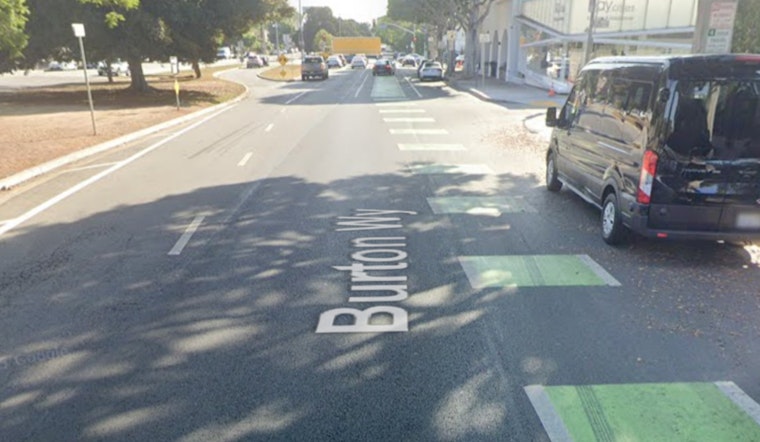
The long-simmering fight over a high-rise on Burton Way swung in favor of the developer this week, as the Beverly Hills City Council voted to overturn the Planning Commission’s denial of Crescent Heights’ Builder’s Remedy application at 8844 Burton Way. The decision revives a 26-story, roughly 200-unit tower in the middle of the city and wipes out a 3–2 commission vote from last fall, putting questions about neighborhood scale and state housing law right back on the front burner.
Council sides with developer on appeal
At its March 24 meeting, the council granted Crescent Heights’ appeal, according to Urbanize LA. City staff and the city attorney told council members that under state Builder’s Remedy rules, the Planning Commission had very limited room to deny the proposal in the first place, a legal framing that loomed over the entire discussion.
What the project would build
City of Beverly Hills project documents describe a 26-story building with roughly 200 apartments, including a mix of studios and two- and three-bedroom homes. The plan calls for 22 deed-restricted affordable units, all stacked above a multi-level parking structure.
The city’s project packet also includes environmental review material, including CEQA and energy and water compliance memos that staff circulated during public hearings as part of the administrative record.
Why the Planning Commission said no
The Planning Commission’s resistance dates back to last fall, when it first drafted a denial in October and then voted 3–2 in November to reject the Burton Way proposal. Several commissioners pointed to the tower’s scale, what they saw as potential privacy and safety impacts, and the original plan to locate affordable units on lower floors.
Those objections, along with pointed public testimony from nearby residents, were detailed in coverage of the hearings by the Beverly Hills Courier, which outlined the arguments commissioners cited in their denial.
State guidance shaped the council’s decision
The city’s room to maneuver was further narrowed by state housing officials. In formal letters to Beverly Hills, the California Department of Housing and Community Development (HCD) told the city that Builder’s Remedy protections generally bar jurisdictions from disapproving a qualifying project solely because it conflicts with local general-plan or zoning rules.
Those HCD letters, which appear in the city’s project records alongside a memo from the city attorney, were repeatedly referenced in staff materials and during council deliberations. HCD’s position is laid out in more detail in its correspondence to the city Department of Housing and Community Development (HCD)
A recent pattern in Beverly Hills
The Burton Way vote did not come out of nowhere. The council’s move follows a recent court ruling that forced Beverly Hills to rescind its denial of a separate Builder’s Remedy high-rise: a 19-story proposal at 125 S. Linden Drive.
That litigation, and the judge’s decision in favor of the developer, has become a running storyline in local housing politics and a frequent point of reference whenever Builder’s Remedy projects come up at City Hall, as reported by the Beverly Press.
Next steps and what to watch
With the appeal now granted, Crescent Heights can move ahead to the next rounds of ministerial approvals and permit reviews. Opponents, however, are widely expected to keep pressing for design tweaks, added safety conditions, or further legal challenges as the process continues.
The city’s public agenda and packet for the Burton Way item, which include staff reports, CEQA documentation, and county filing notices, lay out the procedural roadmap that will govern the upcoming administrative steps. City agenda and packet
Legal implications
For Beverly Hills officials, the legal calculus is now front and center. The city must decide how far it can go in attaching narrow, defensible conditions on construction without sliding into territory that could trigger another courtroom fight over the limits of local control under state housing law.
HCD’s written guidance, combined with the city attorney’s assessment, signals that future denials of Builder’s Remedy proposals would come with significant legal risk. That reality is expected to influence how Beverly Hills handles the dozen-plus similar applications that remain on file.





