

























































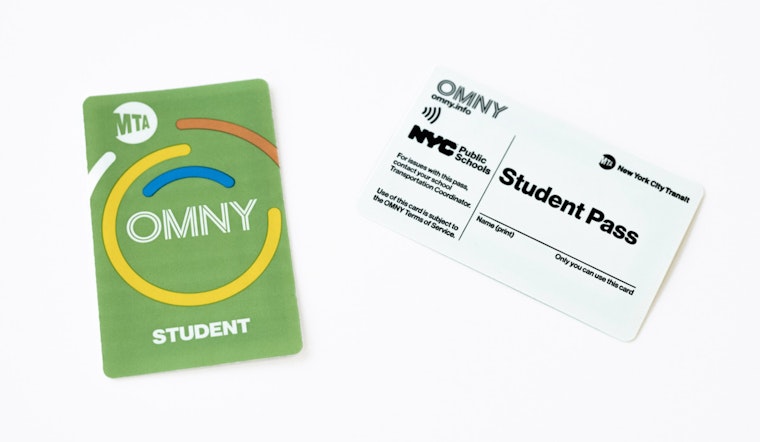
For a lot of New York City kids, getting to class now comes with a new pop quiz: will the flimsy green student OMNY card actually work at the turnstile, or will they be stuck paying out of pocket - or hopping the gate - just to make first period?
Students and parents across the city say the paper-thin cards are cracking under everyday use. They report passes that stop working after getting wet in the rain or bent in a backpack, sudden deactivations with no warning, and replacement requests that drag on for weeks. Families and advocates warn that the mix of fragile cards and slow fixes is pushing some kids toward fare evasion just to get to school or after-school programs.
As Gothamist has reported, students and parents in multiple boroughs describe cards that simply cannot hold up to normal daily life. Some students told the outlet they end up paying the fare when their pass fails. Others said their peers skip the payment altogether and jump the turnstile rather than risk missing class while they wait for a new card.
Chalkbeat has documented the same pattern from the school side, with principals and transportation coordinators reporting replacement waits that can stretch beyond a month. Education Department officials told the outlet that more than 890,000 student OMNY passes have been delivered to schools, and urged families to go through their school’s transportation liaison or other designated staffer when a card fails. The MTA, for its part, said it flags cards for possible misuse, and that schools play a key role in reactivating or replacing those passes.
Panel and Advocates Push for Stronger Cards and Free-er Rides
The issue has grown big enough that it landed in front of the city’s Panel for Education Policy. At a recent meeting, the panel approved a resolution calling for tougher, more practical rules for student transit cards, according to Gothamist. The resolution presses for universal access to student passes, unlimited rides, more durable card materials and faster replacement timelines.
Transit advocates, including Transportation Alternatives, argue that expanding who qualifies for a student pass and speeding up replacements would undercut the incentive to dodge fares in the first place. They are pressing city agencies to treat the problem like what it effectively is: a barrier to getting kids into classrooms on time.
MTA Eyes Sturdier Plastic and Phone-Based Pass Pilot
City officials say they are working on technical fixes, though many of them are still in the planning stage. The Education Department has told parents it is in talks with the MTA and the card vendor about switching to a sturdier card material, and officials have outlined plans to test a digital option that could live on students’ devices starting in the coming school year.
According to Chalkbeat, DOE representatives said a pilot program for virtual student OMNY cards is slated to roll out in the fall. Students in that pilot would be able to link their passes to a device, while schools would continue to keep physical cards on hand. Officials stressed that a physical card will remain available for any student who does not have, or is not allowed to carry, a smartphone.
Who Qualifies Now - and Who Gets Left Out
The current rules already leave some families feeling shut out. The Education Department’s Student OMNY FAQ explains that passes are distributed through schools and are generally reserved for students who live more than a half-mile from their campus. That cutoff can exclude families whose commutes are short on paper but tricky in real life.
Per the DOE, student OMNY cards provide four free rides per day and “cannot currently” be stored in a digital wallet, even as pilots are discussed elsewhere. The agency’s guidance on schools.nyc.gov spells out how to request a replacement and who families should contact when a card suddenly stops working.
Parents and advocates say the fixes they are asking for - more durable cards, quicker turnaround on replacements, broader eligibility rules and a carefully tested digital option - are all straightforward moves that could prevent bigger headaches this spring. City officials say they are monitoring reports coming in from schools and plan to keep up consultations between the DOE and the MTA as they pilot digital changes and weigh a change to the physical card material.





