

























































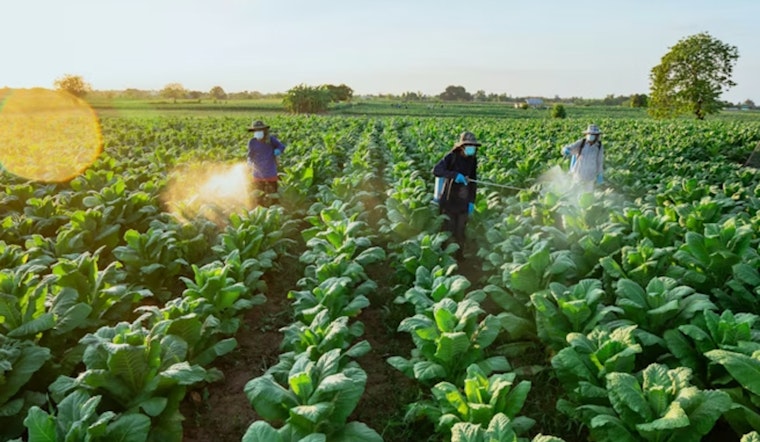
Minnesota’s farm fields are at the center of a growing Capitol showdown, as lawmakers from both parties rally behind a plan to phase out paraquat, a powerful herbicide that researchers increasingly link to higher rates of Parkinson’s disease.
The proposal would block paraquat from store shelves, then from fields altogether, and order the Minnesota Department of Agriculture to round up and safely dispose of leftover supplies. Supporters frame it as a public health move to protect farmworkers and nearby communities. Opponents warn it could yank a key weed-control tool from growers who are already squeezed by costs and pests.
As reported by FOX 9, lawmakers rolled out the push as part of a broader campaign to fight Parkinson’s disease, with bill sponsors and advocates highlighting the chemical’s potential risks. Local coverage and a recent press event also featured Rep. Brad Tabke and Rep. Kristi Pursell. KTTC quotes Tabke saying, “If you live within 500 meters of where paraquat was sprayed, you had two times the likelihood of getting Parkinson’s.”
What the bill would do
The measure, HF3965, would prohibit the sale of pesticides containing paraquat beginning January 1, 2027, and then ban their use starting January 1, 2028. It also directs the Minnesota Department of Agriculture to collect and dispose of remaining stocks that are already in the state.
According to Minnesota House Research Department materials, the bill further requires the agency to submit a report detailing paraquat use in Minnesota and the status of the supply chain as the phase-out progresses.
Supporters and opponents
Advocates, including national Parkinson’s organizations and local public health allies, argue that state action is overdue, given a growing stack of epidemiological studies tying paraquat exposure to elevated Parkinson’s risk.
The Michael J. Fox Foundation has pushed for paraquat bans, pointing to the potential danger for people who work in or live near farm fields. On the other side, farm groups such as the Minnesota Farm Bureau Federation told House lawmakers that paraquat is already a federally restricted-use product, and they raised concerns about pulling a tool growers rely on to keep weeds in check.
Why now
The timing in St. Paul is no accident. The paraquat landscape is shifting as major producers announce plans to cease production, yet existing stocks and other suppliers mean the chemical would not disappear from the market overnight.
In recent weeks, groups such as the American Parkinson Disease Association and other advocacy outfits have highlighted a decision by Syngenta to stop making paraquat. Watchdogs like the Environmental Working Group point to a wave of similar state bills around the country, suggesting momentum is building beyond Minnesota.
At the same time, thousands of paraquat-related claims are bundled in a federal multidistrict litigation, a development that has intensified both public scrutiny and political pressure, according to Sokolove Law.
Timeline and next steps
HF3965 received a hearing in the House Agriculture Finance and Policy Committee on March 11 and remains under consideration there. A Senate companion bill, SF4160, was introduced in early March, giving the proposal a path in both chambers.
According to the bill text, sponsors built in a phase-in period to give growers time to adjust if the paraquat ban moves forward. Committee votes and floor scheduling will ultimately decide whether those 2027 and 2028 deadlines stick, according to the House schedule and SF4160.
If HF3965 advances out of committee, Minnesota could join a growing list of states moving to sideline the herbicide, forcing lawmakers to weigh crop protection needs against potential long-term health costs. Legislators backing the ban have also floated a separate $25 million Parkinson’s research fund aimed at boosting Minnesota research hubs, according to KTTC.





