

























































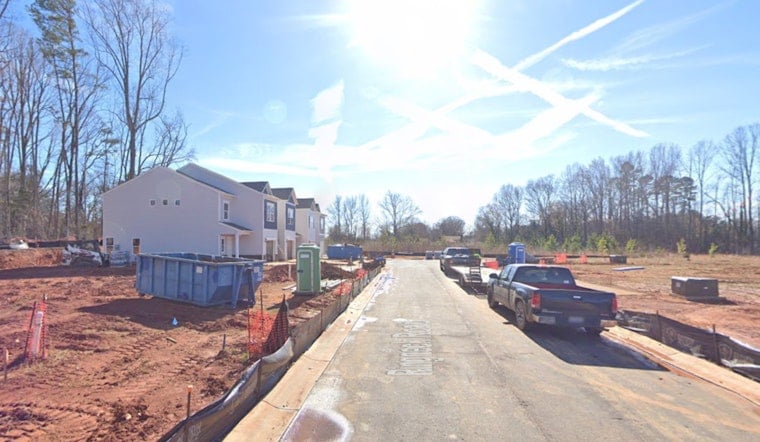
Charlotte homebuilders are racing to fill the so-called "missing middle" with townhomes, duplexes and accessory dwelling units, trying to give priced-out buyers a shot at ownership without the cost of a full-blown single-family house. The strategy is simple enough: fit more homes on smaller parcels and, where possible, layer in public incentives to bring prices down a notch.
As reported by the Charlotte Business Journal, local developers say tighter footprints let them boost the number of units while offering something more attainable than a traditional detached home. One builder already betting on this formula is Smith Douglas Homes, which is selling paired "Duet" townhomes at its Hickory Glen community in northwest Charlotte with prices starting in the high $200,000s. Smith Douglas is also advertising incentives and quick-move-in inventory at the site.
Zoning changes opened the door
Charlotte's long-range Future 2040 plan explicitly encourages more middle-density housing - duplexes, triplexes, fourplexes, townhomes and ADUs - as part of a broader push to diversify neighborhood housing options. The Charlotte Future 2040 Plan lays out goals and regulatory concepts intended to coax those types of projects into more corners of the city.
That framework carried into a new Unified Development Ordinance that took effect in mid-2023, changing where and how some of these units can be built and dialing back hurdles such as rezoning and parking requirements. A recent review of Charlotte's reforms highlights the UDO's launch and how it expanded by-right options for small multiunit housing across the city. The Century Foundation notes that the updated rules give builders a clearer legal path to pursue missing-middle projects.
Market snapshot: demand meets tight supply
Market data helps explain why builders are experimenting with denser product. Canopy MLS reported a January 2026 median sales price near $390,000 for the Charlotte region, while months-of-supply stayed low, underscoring the squeeze on entry-level buyers and the shortage of lower-priced homes. The Canopy Realtor Association weekly market report shows inventory ticking up a bit, but with pricing and days-on-market patterns that still leave many would-be buyers watching from the sidelines.
Where builders are trying new models
Developers are rolling out these concepts at several price tiers. At Hickory Glen, Smith Douglas is selling compact paired units that the company prices from the high $200,000s to low $300,000s, trying to thread the needle between affordability and reasonable access to Uptown. Smith Douglas lists floor plans and incentives for multiple quick-move-in options at the community.
On a different part of the spectrum, the city and nonprofit partners are backing deeply subsidized for-sale townhomes for lower income households. The Hoover Townes project, a 39-unit development on a former motel site, was launched as an affordable homeownership initiative with prices reported between $190,000 and $230,000 and down-payment assistance available through local programs. WFAE and the City of Charlotte reported on the groundbreaking.
The catch: incentives and scale matter
Urban planners and housing advocates caution that simply legalizing missing-middle housing does not automatically translate into middle-class-friendly prices. Without subsidies, density bonuses or other carrots, developers tend to produce higher-margin versions of townhomes and duplexes that can still land out of reach for many local households. Independent reviews of Charlotte's reforms recommend pairing zoning changes with anti-displacement strategies and targeted funding to keep the benefits from flowing only to higher earners. The Century Foundation underscores those tradeoffs.
What to watch next
City programs and building-permit data will show whether the missing-middle agenda turns into large-scale delivery at the intended price points. The municipal Queen City ADU Program, launched last fall to offer forgivable financing to homeowners who add ADUs in exchange for renting them at affordable rates, remains a key test. The city's ADU hub and program packet spell out design rules, eligibility and funding terms, and the City of Charlotte explains how the initiative is structured.
If builders keep fitting more homes onto smaller lots and the city continues to pair looser zoning with targeted affordability dollars, Charlotte could see a wider range of home sizes and price points in the coming years. For now, watch permit filings, UDO-compliant site plans and the ADU interest list for early clues on whether the missing middle will actually work for the middle.





