

























































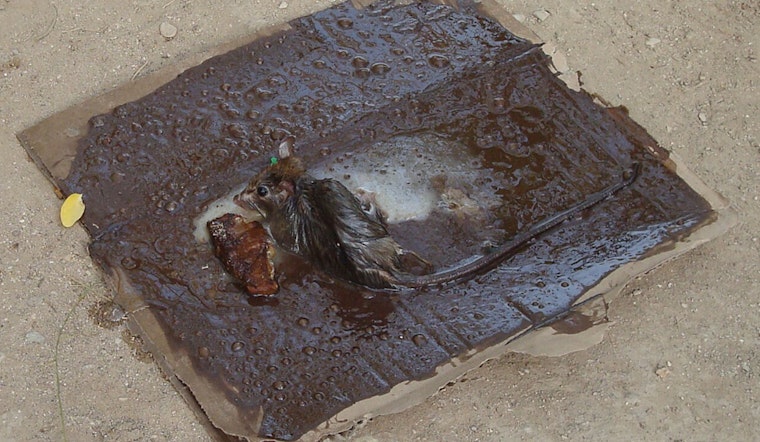
Rat season in New York City is starting to look a lot more like a political fight than a pest problem, as City Councilmember Harvey Epstein pushes a bill that would ban the sale of rodent glue traps across the five boroughs. Introduced in February, the proposal frames the sticky boards as both a cruelty issue and a public health concern, yanking a usually low profile tool of pest control into the spotlight at City Hall.
As reported by The City, Epstein (D‑Manhattan), joined by sponsor Councilmember Farah Louis (D‑Brooklyn), would outlaw retail sales of glue boards intended for mice and rats. Epstein told reporters the way glue traps work "is harmful not just to the animals but to family pets and society at large."
Animal welfare groups quickly lined up behind the measure. In a statement, PETA praised the proposal as a chance to spare "countless mice, rats, birds and other animals" and noted that several national retailers have already pulled glue boards from their shelves, arguing the marketplace is moving away from the product on its own.
Health and humane concerns
Public health guidance raises a different sort of red flag. Officials including the Centers for Disease Control advise against glue and live traps, warning that captured rodents often void urine or droppings when frightened, which can increase the risk of disease exposure. CDC guidance and wildlife rehabilitators also point to prolonged suffering and unintended captures of pets or birds as reasons to favor exclusion and sanitation over adhesive traps.
Industry reaction
Pest control vendors and some homeowners are not exactly cheering. As reported by The City, one seller said his company still stocks glue boards because customers "like to see them," and he warned that the devices remain a tool for residents who cannot afford repeated professional treatments.
Do the traps work?
Evidence on effectiveness is mixed and highly neighborhood specific. City Health Department rat mitigation data show declines in 311 rodent complaints in some targeted zones, from 4,194 complaints in January through June 2024 to 3,956 in the same period of 2025. Advocates counter with a broader view of citywide trends, with PETA citing Department of Sanitation numbers that it says show a roughly 20 percent drop in reported sightings after stepped up trash containment. The two sets of figures slice the rat problem in different ways, according to DOH and PETA.
What New Yorkers can do
Public health and sanitation experts keep coming back to prevention. They urge residents to seal entry points, store food in rodent proof containers, and secure trash so rats and mice are denied food and harborage. For active infestations, the Centers for Disease Control recommend snap traps and professional exclusion work instead of glue boards, and residents can report persistent problems to 311 for city inspection, according to CDC.
The measure remains at an early stage in the Council and will move through hearings and votes if it advances. Supporters say the political ground is shifting, noting that several municipalities and retailers have already curtailed glue board sales, and animal welfare groups are hoping New York will follow. That momentum is what backers say gives the bill a real shot at traction, even as business groups push for exemptions or looser rules.



