

























































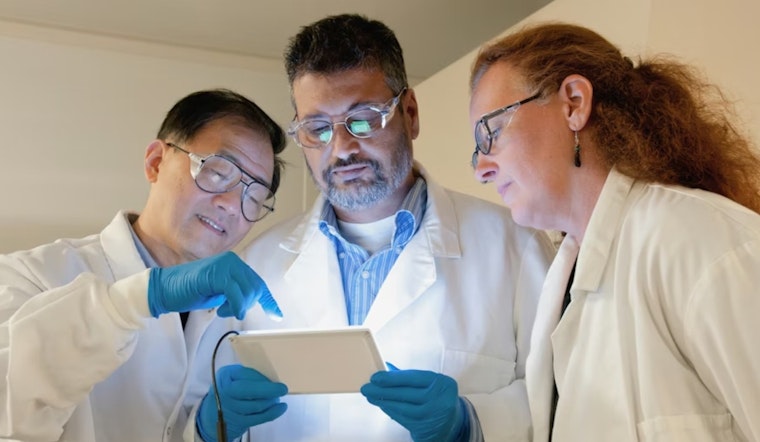
Researchers at Case Western Reserve University School of Medicine and The MetroHealth System in Cleveland say they have engineered programmable RNA nanoparticles that home in on treatment‑resistant leukemia cells and switch off a gene that helps those cells survive. In lab experiments, the particles slowed tumor growth in cell cultures and animal models that no longer respond to standard therapies. The team describes the work as a promising preclinical step toward therapies for patients whose disease has relapsed after tyrosine kinase inhibitor treatment.
How the nanoparticles hunt down resistant leukemia
The researchers designed RNA nanoparticles decorated with an aptamer that recognizes CD133, a surface marker enriched on leukemia stem cells that can persist after drug treatment. Each nanoparticle carries small interfering RNA that knocks down the FTO gene, an m6A RNA demethylase linked to drug tolerance, delivering that silencing payload directly to resistant cells, as detailed in RNA NanoMed.
Lab results in cells and mice
In cell experiments, the CD133‑targeted nanoparticles significantly reduced FTO RNA and protein and impaired colony and spheroid formation in nilotinib‑resistant chronic myeloid leukemia cells. Treated mouse models also showed slower tumor growth, and the researchers say they are moving toward testing the particles in patient‑derived mouse models, according to MetroHealth.
FTO, CD133 and why resistance happens
FTO removes m6A marks from messenger RNAs and has been implicated in cancer cell survival and drug tolerance, and knocking it down can make resistant cells less fit. The RNA NanoMed paper and broader reviews of RNA therapeutics describe how m6A regulators and stem‑like tumor cells drive treatment failure, which helps explain why a delivery system that homes in on CD133+ cells could resensitize tumors to tyrosine kinase inhibitors, as outlined in a review at PMC.
Next steps and what it means locally
Lead author Huiqin Bian said, "This study changes how we understand drug resistance in leukemia," and supervising author Shujun Liu added, "This approach helps solve a long‑standing problem in cancer therapy," in the MetroHealth release. The release also notes support from the National Cancer Institute, and local reporting by Cleveland.com highlighted the team’s work in late March.
Experts caution that these results are still preclinical and that turning a lab nanoparticle into a safe, effective human treatment usually takes years of additional study. Even so, the Cleveland researchers say the programmable RNA platform offers a modular way to seek out and silence the genes that let leukemia cells survive standard therapies, a potential new option if the approach proves safe and effective in further testing.



