

























































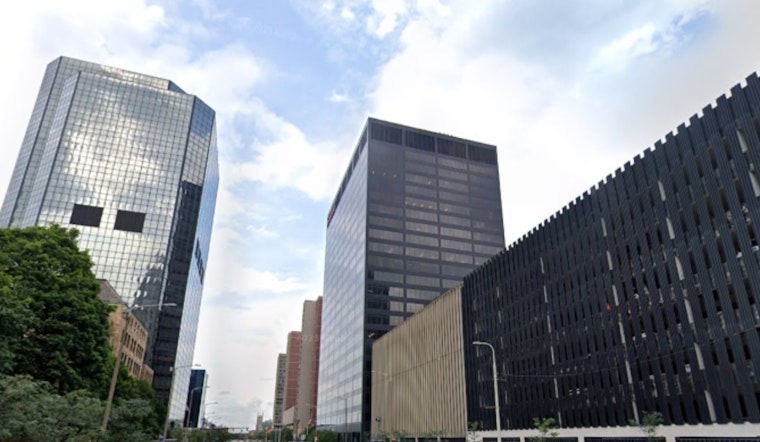
The shuttered 21-story office tower at 1100 Superior has quietly landed a new owner and a new pace: buy low, move slow. By scooping up the building at a bargain price, the buyer has stripped away much of the immediate financing pressure that can force rushed construction, instead buying time to collect tax credits, permits and tenants before committing to an expensive overhaul. For a property that once carried eight-figure valuations, that breathing room may be the project’s most valuable asset.
The sale closed on Sept. 29, 2025, for roughly $8.13 million, according to Crain's Cleveland Business. CBRE, which said it arranged the transaction in October, identified Brady Sullivan Properties as the buyer and described the building as a 21-story Class-A office tower. The brokerage cast the deal as part of a broader conversion wave that is reshaping downtown office inventory, where cut-rate sales often serve as the first move toward mixed-use redevelopment.
Building basics and condition
The tower spans about 576,500 square feet and underwent renovations in 2006 and again in 2013. Listing materials also highlight an attached parking garage with roughly 400-plus stalls. LoopNet details the building’s size and amenities, underscoring why any adaptive-reuse effort here will be intricate and capital intensive. Industry reporting indicates that the loan on the property was liquidated earlier, leaving the building as real estate owned before the auction sale, a financial backdrop that helps explain the steep discount from prior appraisals, according to Connect CRE.
Why the price matters
Developers and brokers say that buying at a deep discount fundamentally changes the conversion math. With a lower acquisition cost, there is less immediate debt service and more runway to chase historic tax credits, stack state incentives and bring in patient equity instead of high-pressure capital. As reported by Crain's Cleveland Business, that slower, more deliberate approach can be the difference between a fully financed, phased project and one that stalls mid-construction. For a half-million-square-foot building, carefully layering incentives and timing each phase is often the only way to make apartments, offices and ground-floor retail pencil out.
What comes next
“Cleveland’s central business district continues to evolve as a national model for adaptive reuse,” CBRE said in its release, framing the 1100 Superior sale as one more chapter in the city’s push to repurpose older office towers. CBRE and local brokers expect the buyer to spend months on engineering studies, entitlement work and structuring tax-credit equity before rolling out a formal redevelopment blueprint. Even with a patient owner, converting more than 576,000 square feet is likely to be phased and could take years to fully deliver.
If the plan comes together, 1100 Superior would join a growing list of downtown projects that have transformed surplus office space into housing and hospitality, reshaping both occupancy and street life in the city’s core. Observers say the modest purchase price gives the new owner unusual freedom to fine-tune the mix of residential units and commercial tenants instead of racing to cover an oversized mortgage. In a market where genuine bargains are scarce, the extra time baked into this deal might be the quiet perk that makes the whole thing work.




