

























































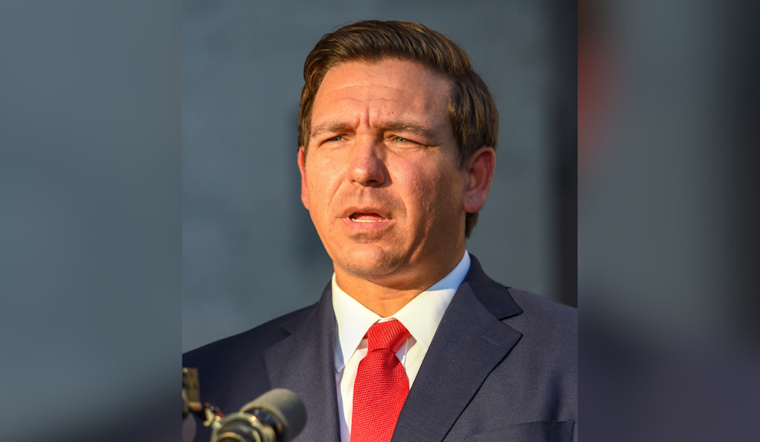
Gov. Ron DeSantis has signed a death warrant for Chadwick Willacy, setting the convicted Palm Bay killer’s execution for April 21, 2026, at Florida State Prison in Raiford. Willacy, now 58, was found guilty in the 1990 killing of his neighbor, Marlys Mae Sather. Prosecutors said Sather was beaten, bound, and then set on fire, and the medical examiner concluded she died from smoke inhalation.
According to CBS Miami, DeSantis signed the warrant yesterday, making it the sixth death warrant he has issued this year. The state has already carried out three executions in 2026, and the governor’s order specifies both the execution date and the method to be used at Florida State Prison.
The crime, per court records
Court records describe a brutal sequence of events on Sept. 5, 1990. Sather returned to her Palm Bay home and found Willacy inside, according to the filings. The documents state that he struck her, tied her hands and feet, wrapped a telephone cord around her neck, then doused her with gasoline before setting a fire.
Investigators later discovered Sather’s checkbook at Willacy’s residence, along with ATM photographs showing him using her bank card. Prosecutors introduced that financial trail at trial, and those details are laid out in the court filings.
Trials and appeals
Willacy was convicted in December 1991 of first-degree murder, first-degree arson, and related offenses. The initial jury recommended a death sentence by a 9–3 vote. In 1994, the Florida Supreme Court threw out that sentence and ordered a new penalty phase. A second jury in 1995 recommended death again, this time by an 11–1 vote, and the trial court reimposed the death sentence.
What followed was decades of postconviction litigation. Willacy pursued state postconviction relief and federal habeas corpus petitions, but courts repeatedly denied his claims. The Florida Supreme Court opinion and related federal court filings outline those efforts and the eventual rejections of his Hurst-based and other challenges.
Where this fits in Florida’s execution surge
The new warrant lands in the middle of an unusually intense period for Florida’s death penalty system. The state carried out 19 executions in 2025, a modern-era high, and the growing stack of death warrants plus tight timelines has drawn scrutiny from courts and advocacy groups alike. The Washington Post reported that Florida’s execution spree significantly influenced national execution totals.
Legal status and what’s next
With the governor’s warrant now in place, Willacy’s legal team can still try for last-minute relief. His lawyers may file new postconviction motions or emergency stay requests in state and federal courts. Whether any of that gains traction is uncertain, given how many prior challenges have already been turned away.
Previous rulings have rejected Hurst-related arguments and other constitutional claims, which leaves Willacy with limited but not entirely closed avenues for relief. The Florida Supreme Court opinion and the federal orders linked above trace the long arc of his appeals and denials, and those same courts will likely be asked to weigh in again.
The death warrant creates a tight timeline. Any stay or new form of relief would have to come from the courts in the weeks leading up to April 21. Court dockets and official rulings will ultimately determine whether the execution goes forward as scheduled or gets pushed back yet again.





.jpeg)