

























































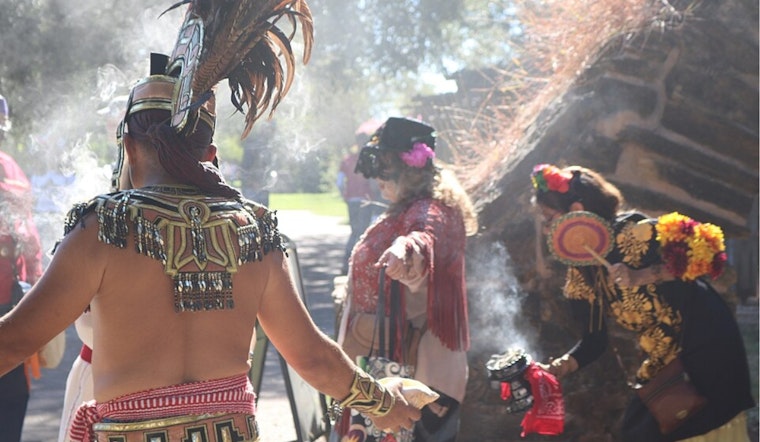
Next weekend, Emma Prusch Park in East San Jose turns into a roaring, three-day Mexica New Year ceremony as hundreds of dancers in feathered headdresses, beaded neckpieces and seed-pod rattles take over the grounds. The celebration runs on nonstop drumming, conch-shell calls and thick clouds of copal incense while danzantes move in concentric circles to mark the turning of the year.
What to expect
Hand-carved wooden drums, shell trumpets and trails of copal smoke set the rhythm for hours of ritual dancing, with participants describing the choreography as a spiritual practice that puts down prayers with the feet. The regalia is painstakingly assembled with real feathers, beaded pendants and rattles tied at the ankles, and the dances often stretch for hours, blurring the line between ceremony and neighborhood festival, as reported by The Mercury News.
Who organizes it
The gathering is anchored by Calpulli Tonalehqueh, a San Jose collective whose name translates to those who accompany the sun and which emerged from local danzante circles in the early 2000s. Community leaders such as Yei Tochtli Mitlalpilli steward the annual celebration, while long-time dancer and arts leader Tamara Mozahuani Alvarado helps guide sister ceremonies and year-round programming. The group’s event listing lays out the weekend schedule, and local coverage has highlighted Alvarado’s civic arts work and role in danza, as shown by Calpulli Tonalehqueh and San José Spotlight.
Roots and resilience
Scholars trace many of the dance steps and musical forms back to the Mexica capital of Tenochtitlan at its height in the 1500s, while also noting that Spanish colonization disrupted and in many cases decimated traditional musical life. Contemporary danzantes have worked to reconstruct and adapt the ritual repertory, blending recovered elements with new teachings to keep the practice alive. As outlined by Kristina Nielsen, that recovery is both scholarly and communal, functioning as a form of intergenerational cultural transmission.
When and where
The 28th annual Mexica New Year runs next weekend, Friday through Sunday, at Emma Prusch Park in East San Jose. Admission is free, and the program includes a predawn sunrise ceremony, a tianguis marketplace and daytime performances. The organizer’s festival listing details the weekend program, and the city’s parks directory confirms Emma Prusch Park as the host site, per Calpulli Tonalehqueh and the City of San Jose.
Why it matters
Organizers and arts groups describe the weekend as more than a show. It is a space where language, music and craft are handed down between generations. Arts profiles and funders note the scale of the celebration, which draws thousands over the course of the weekend, and co-founder Yei Tochtli Mitlalpilli has characterized it as the nation’s largest Mexica New Year gathering, according to reporting and arts profiles. As noted by the Alliance for California Traditional Arts and The Mercury News, the result is both a striking public spectacle and a living archive of culture in motion.





.JPG)