

























































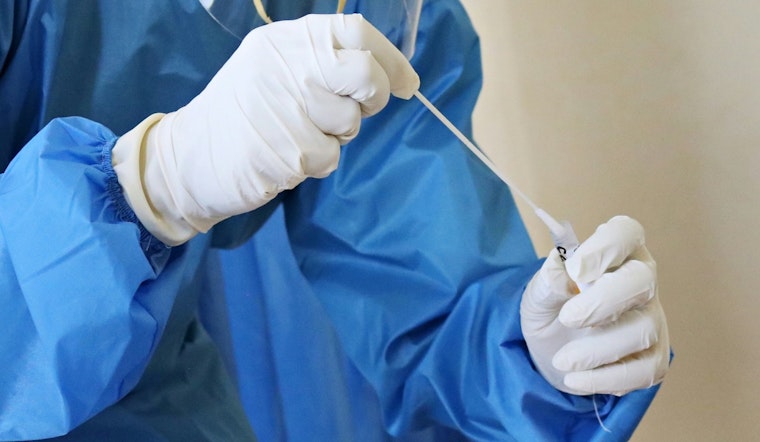
Duke University scientists in Durham are testing whether a quick scrape high inside the nose might flag Alzheimer’s-related molecular changes long before memory trouble shows up. The experimental test uses a tiny brush to sample the olfactory lining and is drawing local volunteers who say they signed up after watching the disease hit their families. Investigators see the approach as a less invasive and potentially cheaper complement to PET scans and spinal taps while they check how closely nasal signals match established brain biomarkers.
As reported by WRAL, the Duke team led by Dr. Bradley Goldstein has already posted a paper describing single-cell and molecular analyses of cells collected from the olfactory mucosa. That paper, available as a preprint on bioRxiv, reports immune and neuronal signatures in biopsy samples that the authors say are associated with biomarker-positive, preclinical Alzheimer’s disease.
How the nasal brush works
According to the trial listing on ClinicalTrials.gov, clinicians first numb the inside of the nose with a topical spray. They then guide a small cytology brush to the olfactory cleft, a pocket at the very top of the nasal cavity where smell neurons and immune cells share tight quarters. Duke’s research profile describes the outpatient brush-biopsy as yielding olfactory neurons, supporting cells, and immune cells that can be analyzed with sequencing and targeted molecular assays. The actual sampling takes just a few minutes, although the single-cell and other downstream analyses require specialized lab work to tease apart the cellular signals.
What researchers found in early samples
In their initial analyses, the Duke team reports shifts in immune cell states, microglia-like inflammatory programs, and signs of injury to olfactory neurons that appeared even in people who did not yet have clear cognitive symptoms. Those findings are detailed in the bioRxiv preprint. Independent support for the broader concept comes from a 2025 study in Scientific Reports, which found that levels of nasal Aβ42 in nasal discharge tracked with brain amyloid PET scans, suggesting that the nose can mirror some of the same amyloid dynamics seen in the brain.
Why smell matters
Loss of smell often shows up years before noticeable memory decline, and the olfactory system sits right at the brain’s front door, which makes it an appealing place to look for early disease changes. That rationale was reviewed in depth in Nature Reviews Immunology, which highlighted the close interaction between olfactory neurons, immune cells, and neurodegenerative processes. The push for earlier and more affordable tools is intense: the Alzheimer’s Association projects roughly $384 billion in annual costs to care for people with Alzheimer’s and other dementias in 2025, a staggering figure that helps explain why researchers are chasing accessible biomarkers now.
Voices from Durham
Durham residents are not just watching from the sidelines. Local volunteers have been lining up to be swabbed for the study. Sixty-year-old Durham resident Mary Umstead told WRAL that participation felt like a way to help other families after she lost a sibling to Alzheimer’s. Goldstein told the station that his lab "revisited sampling the area in the back of the nose where both neural tissue and immune cells live" and emphasized that "there is a very strong association between smell loss and neurodegenerative diseases like Alzheimer’s and Parkinson’s."
What’s next
The nasal brush test is still squarely in the experimental category. The Duke trial listing on ClinicalTrials.gov shows the study is actively recruiting and carries a primary completion date in late 2027, which means multi-center validation and regulatory review are not arriving tomorrow. Investigators say the next steps include enrolling more participants, standardizing the lab assays, and directly comparing nasal profiles with PET imaging and cerebrospinal fluid biomarkers before any doctor’s office use is on the table.
If the approach holds up, a nasal-based biomarker could lower cost and access barriers to earlier diagnosis and help speed enrollment into trials of disease-modifying therapies. For now, Duke researchers and volunteers describe the work as promising but very much in the preliminary phase, a new potential window into the brain that still needs broader and independent confirmation.





