

























































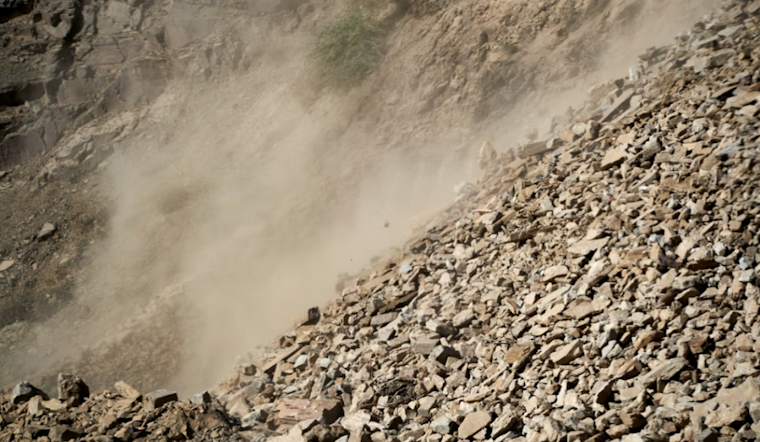
Neighbors in one Westmoreland County community say they are waking up to the same unsettling sight, again and again: a fine gray film of dust coating freshly washed cars, air conditioning units, and entire porches. The gritty layer has appeared repeatedly in recent days, and residents told a TV crew they suspect the haze is drifting over from nearby stone processing. What started as an ugly mess is quickly turning into a bigger worry, with people now anxious about damage to their equipment and what they might be breathing in.
A video shared from the neighborhood shows dust settled across decks, window sills, and cars as residents describe cleaning up several times a day, according to a report by CBS News Pittsburgh. The brief segment shows the residue on vehicles and outdoor units, but does not identify any specific quarry on the page.
State Permits Spell Out Dust Controls For Local Quarries
Public records show quarries in Westmoreland County operate under Pennsylvania Department of Environmental Protection air permits that require multiple forms of dust control, including water spray systems, water trucks, and daily checks for visible and fugitive emissions. A DEP notice in the Pennsylvania Bulletin lists a limestone operation in Derry Township and details emission limits tied to permitted operations, including an estimated 90.3 tons per year of total particulate matter and about 29.4 tons per year each for PM10 and PM2.5.
Health Experts Say Fine Dust Is More Than Just A Nuisance
While the visible grit on cars and porches is hard to miss, public health experts tend to focus on the smaller particles created when stone is crushed and screened. Fine particulate matter and respirable crystalline silica are small enough to travel deep into the lungs. NIOSH notes that respirable crystalline silica can cause silicosis and other chronic lung diseases. The U.S. EPA warns that PM2.5 and PM10 can aggravate asthma and heart or lung disease and that these particles can penetrate indoors where people live and work.
Neighbors Have Options To Push For Answers
Residents who want state regulators to take a closer look are encouraged to build a paper trail. That can include time-stamped photos of dust on property, notes on how often it happens and what the wind was doing at the time, and formal complaints to the DEP Southwest Region Air Quality office. The DEP notice in the Pennsylvania Bulletin lists contact information for the regional office, along with public comment details for air permits. Local health departments and municipal code offices can also advise on how to document property damage or pursue remediation for repeated soiling.
For now, neighbors say they plan to keep recording what lands in their yards and pushing for monitoring and enforcement wherever permits are already in place. State records show quarry operators are required to limit visible and fugitive emissions. Whether that requirement leads to fewer dusty mornings on this block will likely depend on how those rules are enforced and what, if anything, changes in day-to-day operations at nearby plants.




