

























































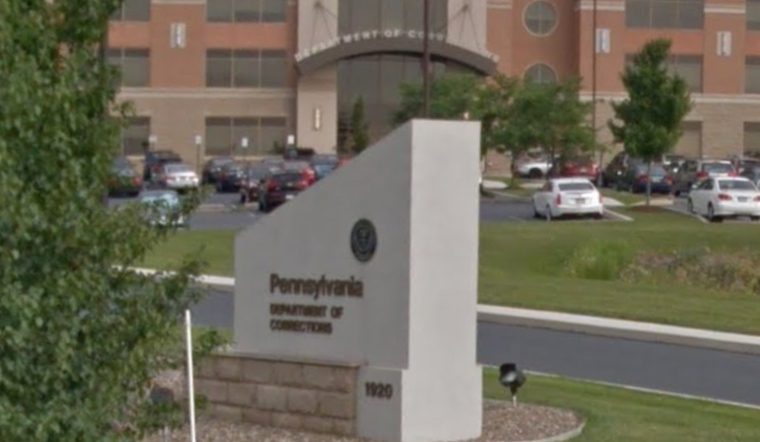
Authorities have charged a former Pennsylvania Department of Corrections psychological services specialist who, investigators say, entered into a sexual relationship with an inmate she was assigned to counsel at State Correctional Institution Fayette. Court papers identify the woman as 37-year-old Elise Fahringer and state that the contact occurred in July and August 2025. The allegations resulted in criminal counts of institutional sexual assault, official oppression, and obstructing the administration of law. The department says it suspended her without pay in November 2025 and now lists her as separated from the agency as of Feb. 28.
According to CBS Pittsburgh, Fahringer admitted to police that she had a physical relationship with the inmate while counseling him. The criminal complaint also quotes the man saying he felt pressured to participate because he feared she might falsely accuse him. The filing states that Fahringer warned the inmate she could tell the parole board he was not making treatment progress, which he told investigators he believed could hurt his upcoming parole. Investigators say those statements, along with letters referenced in the complaint, form the basis for the department’s actions and the criminal referral now in Fayette County court.
Where officials say it happened
The alleged contact took place at SCI Fayette, a maximum-security state prison southeast of Pittsburgh that opened in 2003. The Pennsylvania Department of Corrections facility page notes that the prison runs academic, vocational, and reentry programs, and it details the institution’s housing units, work assignments, and a Reentry Service Office for people nearing release. Those operations help explain why counseling sessions and parole-focused conversations are part of everyday life at the prison.
How the case surfaced
Per CBS Pittsburgh, a lieutenant at State Correctional Institution Smithfield reported the alleged relationship in January 2026 and turned over copies of letters Fahringer had sent to the inmate. Investigators reviewed the letters, interviewed the inmate, and summarized his account in the criminal complaint. That chain of reporting, from a corrections lieutenant to law enforcement and prosecutors, triggered the criminal filing that is now on the record.
Charges and legal stakes
Fahringer is charged with institutional sexual assault, which Pennsylvania’s criminal code defines as sexual contact between staff and an inmate and classifies as a felony of the third degree. The statutory language for institutional sexual assault appears in 18 Pa.C.S. §3124.2, and the general sentencing statute caps third-degree felony prison terms at up to seven years under 18 Pa.C.S. §1103. The complaint also lists counts of official oppression and obstructing the administration of law, which are separate criminal offenses that carry their own misdemeanor classifications and penalties under state law if prosecutors secure convictions.
How this fits a wider pattern
The Pennsylvania Department of Corrections’ 2024 PREA annual report shows the agency tracks. It investigates both staff-on-inmate and inmate-on-inmate sexual misconduct allegations and has expanded training and investigator capacity in recent years. Nationally, the Bureau of Justice Statistics’ 2019–2020 Survey of Sexual Victimization documented thousands of allegations of staff sexual misconduct and related incidents in adult correctional facilities, highlighting how challenging it can be for prison systems to prevent, investigate, and prosecute abuse behind bars. Those reports underscore that such cases are closely examined but often complicated to resolve.
Other recent Pennsylvania prosecutions
State prosecutors have brought similar staff sexual-misconduct cases before. In August 2025, the Pennsylvania Office of the Attorney General announced charges against a former corrections officer at SCI Forest for institutional sexual assault and related offenses, according to a press release from the attorney general’s office. That case, along with the criminal complaint filed against Fahringer, illustrates how investigators and prosecutors sometimes combine felony and misdemeanor counts when staff are accused of abusing their positions. Officials say those prosecutions are intended to protect incarcerated people and preserve the integrity of correctional institutions.
Fahringer has been charged, and the criminal complaint is on file; she is presumed innocent unless and until proven guilty in court. Upcoming court filings and any formal statements from prosecutors or the Department of Corrections will shape the next steps in the Fayette County case, and this report will be updated as new documents or public comments emerge.





