

























































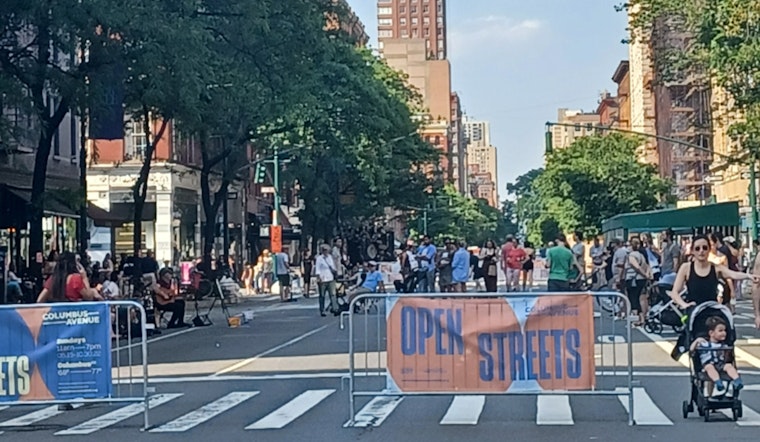
A federal judge has given critics of New York City's Open Streets program a major opening, refusing to toss a closely watched disability lawsuit that could reshape how those car free blocks operate. In a March 10 ruling, the court allowed claims to go forward that barricades, planters and volunteer stanchions have, in practice, blocked paratransit, taxis and rideshares from reaching some doorways. Residents, drivers and nearby businesses are now staring at a stretch of legal limbo as the case moves into discovery, where the program's fine print and on the ground reality will collide.
U.S. District Judge Eric Komitee denied the city's motion to dismiss the claims against municipal defendants, according to amNY. The lawsuit, filed in April 2023, lists a dozen plaintiffs represented by disability advocates who say Open Streets closures have cut vehicle dependent New Yorkers off from essential services. The original complaint, which spells out their legal arguments under federal disability law, is publicly available through amNY.
What the lawsuit alleges
The plaintiffs, many aligned with the group NYC Access for All, argue that moveable metal barriers and concrete planters often block curb cuts and prevent Access A Ride vans, taxis and other vehicles from pulling up to homes and storefronts. Their attorneys say those are not minor annoyances but functional denials of access that amount to discrimination under the Americans With Disabilities Act and related laws. CBS New York has highlighted residents who say they have been unable to get paratransit service directly to their doors on Open Streets blocks.
DOT's rules and defense
The Department of Transportation has maintained that Open Streets are designed to create safer, more welcoming public space while still preserving local drop offs and emergency access. Officials point to rules adopted in 2024, codified at Title 34 RCNY 4 21, that govern how community partners apply for and operate Open Streets. The framework distinguishes between limited local access corridors, full closures and school focused street segments, and it outlines what partner organizations must do to keep traffic and access in line with city standards. Those details are laid out on the NYC Rules site and the program page maintained by NYC DOT.
Why the ruling matters now
By keeping the claims against the city alive, the judge has cleared the way for plaintiffs to seek internal documents and testimony that could reveal how barricade locations are chosen, who is responsible for placing them and how volunteers and partner groups are trained. That discovery process increases the chances of negotiated tweaks to daily operations, including potential steps such as retractable bollards, staffed access points or formalized procedures for moving barriers to let vehicles in, rather than relying only on whatever remedies a court might impose after a full trial. As amNY has reported, attorneys for both sides now expect discovery and possible settlement talks to dominate the next phase.
Legal implications
The suit invokes Title II of the Americans With Disabilities Act and the Rehabilitation Act, and it seeks injunctive and declaratory relief that could require DOT to redesign access points or provide formal staffing at chokepoints. If the plaintiffs can convince the court that current barricade practices result in unequal access for people with disabilities, the judge could order operational changes to how Open Streets are structured or managed across the city. The statutory arguments and requested remedies are detailed in the complaint hosted by amNY.
Local stakes and next steps
Any ruling that forces design or staffing changes would likely ripple through DOT's plans and budget for Open Streets, a program the agency has heavily promoted as a boost for small businesses and neighborhood life. DOT has already pledged funding and technical support to community partners that run these corridors, and court ordered obligations could reshuffle how that money and staff time are allocated. Those broader expansion plans are highlighted in a recent announcement from NYC DOT.
Plaintiffs' attorney Matthew Berman has said the decision gives disability advocates a real chance to prove their case and press for concrete fixes that restore vehicle access where it is needed most. City Hall, for its part, has reiterated that Open Streets are intended to be "vital" public space for all New Yorkers, including people with disabilities. The coming months of depositions and document review will reveal whether those goals can peacefully coexist block by block. CBS New York has aired statements from both sides as the legal fight ramps up.




