

























































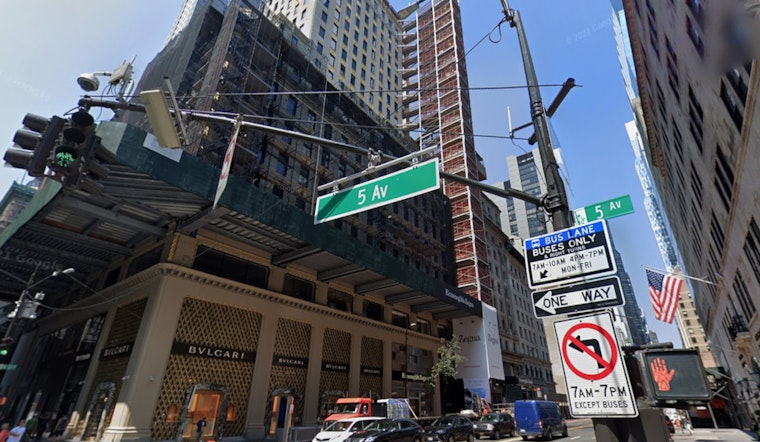
Fifth Avenue, long synonymous with glittering flagship windows and shoulder-to-shoulder holiday crowds, is heading into its biggest redesign in roughly two centuries. City and private partners are putting about $402 million on the table to widen sidewalks, add trees and overhaul stormwater systems so the corridor tilts toward pedestrians instead of cars. Luxury houses and mass-market chains are already responding by expanding, renovating or even buying the buildings they occupy, signaling that the avenue’s next chapter will be as much about real estate strategy as it is about eye-catching displays. With tourism back and major events on the calendar, Midtown’s retail map is poised for a serious redraw.
What The $402 Million Plan Will Do
The city’s package for the stretch between Bryant Park and Central Park is set to nearly double clear pedestrian space, cut crossing distances by about a third, reduce vehicle lanes from five to three and add more than 230 new trees and 20,000 square feet of planters, according to the NYC Mayor's Office. The plan also pays for underground sewer and water-main upgrades so utility work and streetscape construction can be coordinated instead of patched together. City officials say the point is to boost safety, shade and long-term economic activity along one of the world’s most expensive shopping streets.
Investors Are Already Buying In
Local leaders say the redesign has helped kick off a wave of private spending. The Fifth Avenue Association and brokers report heavy deal flow, and the association’s president told Modern Retail the district has seen “probably close to $4 billion” in private investment since 2022. The association oversees the business improvement district that runs through Midtown and handles day-to-day work like cleaning and programming, which officials say keeps the corridor primed for commerce. That blend of public funding and private money has shifted retailer conversations from simply signing leases to exploring ownership as a long-term hedge.
Brands Are Becoming Landlords
Some of the avenue’s biggest names are already acting like landlords rather than tenants. Prada bought the building that houses its Fifth Avenue flagship for about $425 million last winter, according to CNBC. Fast-fashion and luxury rivals are not far behind: Uniqlo purchased a portion of the retail condo at 666/660 Fifth in a roughly $350 million deal reported by Commercial Observer, and Moncler has announced a two-floor, 2,200-square-meter flagship at 767 Fifth slated to open in early 2026, according to a press release from Moncler. IKEA is lining up an urban-format store at 570 Fifth that is scheduled for 2028, and Nike’s 68,000-square-foot House of Innovation continues to loom as one of the corridor’s most visible anchors.
What This Means For Streets And Transit
Supporters say the revamp will make Fifth Avenue safer, shadier and more comfortable to walk, but skeptics worry the tradeoffs could snarl buses and complicate cycling during rush hours, a concern raised in reporting by the AP. That tug-of-war over space for mass transit versus space for pedestrians has played out at public meetings and design reviews, and advocates say the nitty-gritty design work will have to protect bus routes and loading zones. City officials counter that the investment should ultimately pay for itself through stronger retail sales and rising property values.
Why Now: Tourism And Events
Retailers argue the timing is no accident. International visitors are largely back, and special programming is poised to pump up foot traffic this year. The Fifth Avenue Association told Modern Retail it expects more than 1.2 million additional visitors tied to World Cup programming and related events. That kind of surge helps explain why brands are fast-tracking renovations and real estate plays to capture a larger slice of a recovering, more global shopper base. For visitors, the promise is bigger sidewalks and more places to linger. For store operations teams, it means years of recalibrating deliveries and back-of-house logistics as construction rolls along.
What Retailers Are Betting On
Planting a flag on Fifth Avenue is not cheap. Cushman & Wakefield’s market report shows headline asking rents on upper Fifth topping roughly $2,000 per square foot, a price point that pushes big brands toward owning their spaces rather than leasing them, according to Cushman & Wakefield. Analysts say ownership gives retailers wider latitude to program windows, host splashy events and reconfigure layouts without negotiating every move with a landlord, a serious advantage on a street where visibility is revenue. That math is already reshaping who actually owns the ground-floor space behind some of the most recognizable logos in retail.
Next Steps And Timeline
Design teams have been selected and schematic work was expected to wrap this summer, with officials planning to tackle utility upgrades while coordinating above-ground construction to keep disruption in check, according to the NYC Mayor's Office. City and private partners say the build-out will be staged to protect retail trade as much as possible and to avoid stacking closures on top of one another. For an avenue that has long served as a global showcase, the next few years will test whether a greener, slower Fifth Avenue can comfortably coexist with the high-stakes commerce that has defined it for generations.





