

























































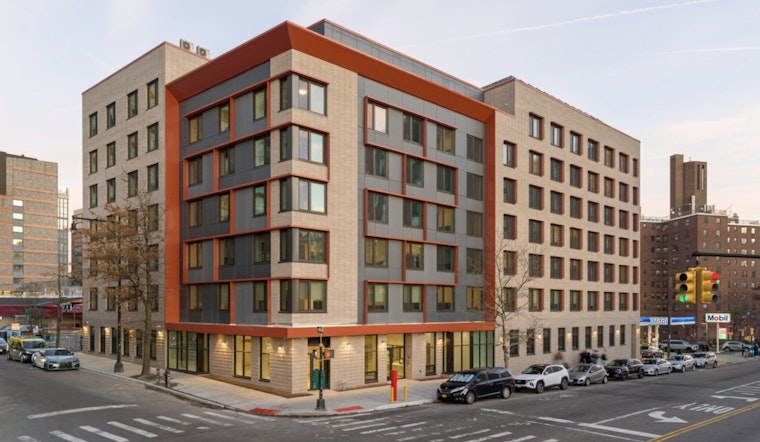
Flushing’s newest family shelter is opening its doors with a twist that a lot of parents and kids will care about: no one has to give up the family pet to get a bed.
Magnolia Gardens, a seven-story family shelter that opened Sunday, allows residents to keep their animals, a shift in policy meant to keep families from surrendering beloved pets just to access housing. The building has about 90 apartment-style units for families with children and comes with on-site case management, counseling and other wraparound services. Project partners say placements will prioritize families from the Flushing area and include multilingual support tailored to the neighborhood.
According to Urban Resource Institute, Magnolia Gardens is being operated by URI as a Department of Homeless Services transitional housing facility, co-developed with Asian Americans for Equality. The organization says the site will house families across 90 modern apartments and provide daily case management, housing navigation and workforce supports meant to help residents move on to permanent housing.
In a press release from the Mayor’s Office, city officials said Magnolia Gardens will also support Urban Resource Institute’s People and Animals Living Safely (PALS) program. Twenty units are being reserved as pet-friendly so families can enter with their animals, and the pilot is expected to accommodate up to 30 pets in those apartments. City leaders frame the move as part of a wider push to cut down on housing-related pet surrenders.
Design and day-to-day amenities
New York YIMBY reports that Magnolia Gardens was built to Passive House standards, a design approach intended to boost indoor air quality and energy efficiency. The development includes a public community room and 24-hour security for residents.
Gothamist adds that the lobby has been outfitted with a water fountain and that organizers have set up a large recreation room for children along with an on-site laundry. The goal is to make the daily routine for families a bit less chaotic while they navigate a stressful period.
How families will be placed
Asian Americans for Equality says families with children under 21 will be referred to Magnolia Gardens through the city’s PATH intake system. Residents can expect to stay for roughly a year while receiving intensive supports.
Placement will be prioritized based on a child’s school and prior residence in Queens Community District 7, with the aim of preserving school stability whenever possible and keeping kids close to their existing routines.
Why pet-inclusive shelters matter
City officials describe pet-inclusive shelters as a practical fix with two big benefits: households stay intact, and fewer animals wind up at crowded city shelters. Service providers say the human-animal bond often acts as a stabilizing force when families are under intense strain.
Officials from the Mayor’s Office point to Urban Resource Institute’s existing record of keeping families and pets together as a sign that this pilot could improve outcomes for both residents and their animals.
Local leaders respond
Local advocates told Gothamist that Magnolia Gardens’ design and on-site services reflect a different, more inclusive and holistic approach to sheltering. City officials say the project marks a shift away from older shelter buildings and toward nonprofit-owned, purpose-built facilities.
Organizers say they plan to keep up community outreach as families move in, with the goal of making Magnolia Gardens feel like a known and integrated part of the neighborhood rather than a mystery behind closed doors.
Next steps
URI and AAFE say they will convene a Community Advisory Board and a Housing Services & Retention Collaborative to help coordinate referrals and local partnerships, work already spelled out in their project commitment documents. The groups say the development will also create neighborhood job opportunities while supporting residents as they transition toward permanent, affordable housing.




