

























































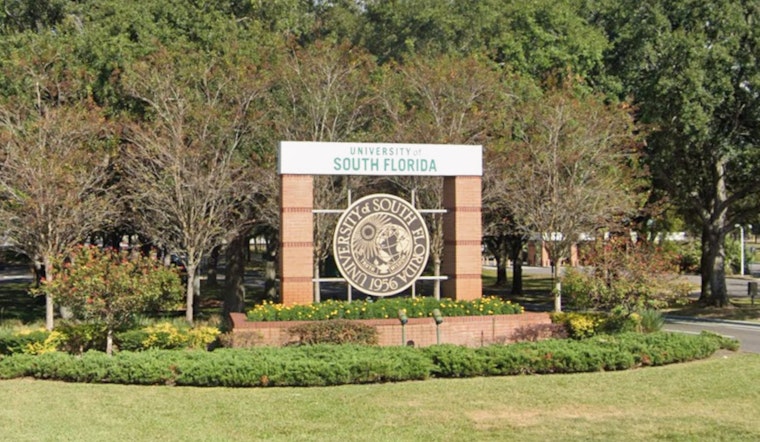
The Global Virus Network, the international coalition co‑founded by Dr. Robert C. Gallo, has officially moved its international headquarters to the University of South Florida, cutting the ribbon on March 5. The move plants GVN’s central operations inside USF’s Institute for Translational Virology and Innovation and drops a high‑visibility anchor into Tampa Bay’s fast‑growing life‑sciences scene. University and network leaders say the relocation brings long‑term research muscle, training pipelines and coordinated global response efforts straight into the region.
Headquarters, ceremony and the pitch
USF staged a formal ribbon‑cutting at its Research Park facility, billing the partnership as a permanent hub for research coordination, surveillance and rapid response. The university says the headquarters move "connects our students, researchers and clinicians with leading virologists and institutions around the world," according to USF Health. USF and GVN note that the campus was selected in 2024 to serve as the network’s international headquarters.
The Global Virus Network describes itself as an independent coalition of leading human and animal virologists that includes more than 90 Centers of Excellence and affiliates in over 40 countries, all focused on better detection, research and pandemic preparedness. That global footprint, GVN says, will now be coordinated from the USF hub as the network expands training and surveillance work. Global Virus Network materials say the relocation is intended to tighten international collaboration and boost pandemic readiness.
Gallo, the institute and local partners
Dr. Robert C. Gallo, widely known for his role in identifying human retroviruses and for the co‑discovery of HIV as the cause of AIDS, is serving as founding director of USF’s Institute for Translational Virology and Innovation and as GVN’s international scientific director. Tampa General Hospital, which is partnering on clinical programs, reports that Gallo will also lead a Microbial Oncology Program at its Cancer Institute while directing collaborative research at USF. Officials are framing Gallo’s presence and the headquarters move as both a scientific win and a public signal that Tampa Bay is serious about building up its biomedical portfolio.
Mathew Evins, chief executive officer and managing executive of the Global Virus Network, has described the headquarters as a new focal point for worldwide scientific collaboration, stressing the need for infrastructure that stays active between outbreaks, according to the network’s statement. Evins says the relocation will help GVN "strengthen surveillance, accelerate research and improve the world’s ability to respond to viral threats," language carried in network and university releases. The comments echo a broader call from virologists for permanent international capacity instead of ad‑hoc systems that spin up only when the next crisis hits.
Training, surveillance and the pipeline
GVN and USF plan to scale up short courses, fellowships and public webinars, and the network also lists a "Global Guardians" high‑school summer program set for Tampa from July 20–24, 2026 as part of its education efforts. These offerings are being pitched as ways to build local talent pipelines and reinforce genomic surveillance and outbreak response in a region that officials say is vulnerable to climate‑sensitive diseases. Global Virus Network materials highlight the educational and workforce pieces as central to the partnership.
The university’s Research Park is already described as a regional innovation engine. USF has reported that its innovation enterprise supports thousands of jobs and, according to a prior university analysis, generates more than $71 million each year in tax revenue. Local leaders argue that dropping an international scientific network like GVN into the same space will deepen Tampa Bay’s life‑sciences cluster and help draw additional research partners and private capital. For USF, officials say, the headquarters is meant to amplify both scientific output and economic spillover benefits for the wider region. USF Research Park has previously underscored the park’s role in driving local growth.
Business outlets have been watching the development, with the Tampa Bay Business Journal covering the opening and the university‑network partnership. The Tampa Bay Business Journal reported on the leadership roles and ribbon‑cutting ceremony as part of its broader look at Tampa Bay’s expanding research infrastructure. University and network representatives say the headquarters is intended to serve as a long‑term base for research, training and global scientific coordination.



