

























































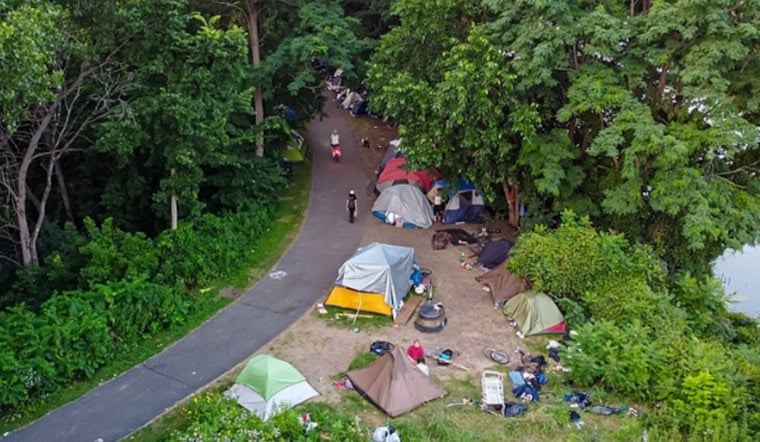
Regulars on the Los Angeles River path near Griffith Park say their scenic route has turned into a stressful one, with tents and tarps tucked into storm drains and discarded drug paraphernalia in plain view of cyclists and families. People who use the trail report coming across used needles and piles of abandoned belongings, and some nearby residents say they have noticed more violent or organized activity near hidden encampments. City officials and outreach workers insist they are on the case, but they also warn that progress here is slow, technical, and far from simple.
An exclusive report from FOX 11 documented people living in makeshift shelters and inside storm drains just a short distance from the river trail. The station reported used needles, other drug paraphernalia, and what appeared to be stolen items scattered around encampments. A local therapist and outreach worker told the station that some people in the area carry tools and unregistered firearms, which has raised safety concerns for both neighbors and outreach teams. Dozens of people are believed to be living along the river through Los Feliz and the Griffith Park stretch, according to the report.
“Residents deserve to feel safe, and we take these reports extremely seriously,” Councilmember Nithya Raman said in a statement to FOX 11. Her office also noted that outreach workers are contending with steep concrete sides, culverts, and other hard-to-reach spots along the river, which complicate both enforcement and delivery of services.
Council District 4’s website states that the district secured an Encampment Resolution Grant from the state and roughly $1.7 million for motel vouchers, outreach, and case management along the river. The district says more than 65 people have moved into the shelter through those efforts. The same page lists additional federal appropriations and contracts with partner agencies that are intended to bring people indoors and connect them with longer-term housing options. Staff for the district says the encampment-to-home push is continuing while case managers maintain street outreach throughout the corridor.
Why outreach around the river is tricky
The Los Angeles River corridor falls under several different jurisdictions and is lined with deep concrete banks, underpasses, and other physical barriers that make access difficult, according to the river stewardship program. An evaluation of place-based encampment resolutions in the L.A. River Basin found that these riverbed areas rank among the hardest locations for outreach, since people are spread out across culverts, underpasses, and private easements. Those physical and jurisdictional complications mean that a single cleanup rarely leads to lasting change without consistent housing placements and follow-up services.
What the city says it’s doing
The City of Los Angeles began targeted encampment resolution efforts along parts of the 110 and the L.A. River in late 2025 with a housing-first goal that combines outreach teams, interim housing placements, and restoration of public access. The mayor’s Inside Safe operations, used in earlier efforts at RV and tent encampments near Griffith Park, are described as part of a broader strategy to bring people indoors with case management and to keep cleared locations from filling up again. City updates and the mayor’s office say that state grants, dedicated outreach teams, and Inside Safe-style operations remain the primary tools being used in and around the Glendale Narrows and Griffith Park.
For people who ride, walk, or run along the river trail, the near-term reality is a balancing act between safer public access and sustained, humane exits from homelessness for those living in the riverbed. Service providers and evaluation reports point out that real long-term progress will depend on steady shelter capacity, ongoing state and federal funding, and stronger cross-agency coordination to reach people in the most inaccessible stretches of the river, as outlined in an Abt Global evaluation of encampment-resolution efforts.





