

























































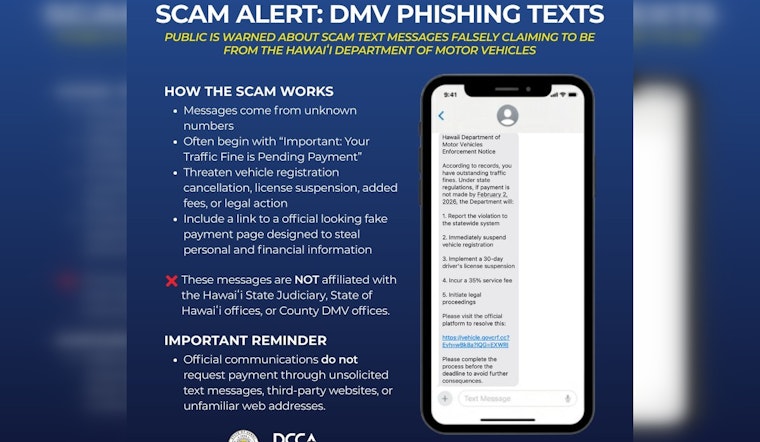
Scam artists are blasting Hawaiʻi drivers with fake DMV text messages that threaten suspended licenses, canceled registrations, extra fees and even legal trouble, all to trick people into handing over money and personal data. State and county officials say the texts are bogus and are urging residents to delete them, avoid clicking any links and never share information in response.
What the texts say
The messages often open with lines such as “Important: Your Traffic Fine is Pending Payment,” then slap on an urgent deadline and a “Pay Now” link that sends users to a fake payment page, according to local reporting and screenshots shared with officials. Some screenshots shown to authorities cite a payment deadline of February 2 and warn that registration will be suspended immediately or that a 35% service fee will be added, details documented by county notices and local media. As reported by the Kaua‘i County Finance Department, the texts are crafted to look official and to pressure people into paying fast.
State and county alerts
The Hawaii Department of Transportation has posted a statewide “#ScamAlert” on X that shows example screenshots of the texts and the sham payment page. The post highlights sample scam domains (partially obscured in screenshots) such as vehicle[.]govcrf[.]cc and warns recipients not to click links or enter any information. The Hawaiʻi State Judiciary and several county vehicle-registration offices have also put out notices stressing that courts and DMV offices do not send unsolicited texts demanding immediate payment.
How to protect yourself
Standard “smishing” safety rules apply: do not tap links, do not reply and do not share personal or financial information in response to a surprise text. Forward suspicious messages to 7726 (SPAM) so your carrier can investigate, then contact the agency directly using a verified phone number or website, and report any losses to federal authorities. For step-by-step guidance, examples and reporting tips, see the DCCA Office of Consumer Protection.
Why this keeps happening
Scammers keep recycling this playbook because it works. Urgent language, spoofed sender IDs, official-looking logos and tight deadlines are all designed to get people to click first and think later. County offices across the islands have been flagging similar schemes since last year, and local advisories from Kauaʻi and Hawaiʻi County show that the pattern is widespread. Comparable warnings from other local outlets show the scam evolving as officials push back.
If you already clicked a link and entered payment information, contact your bank immediately, change any passwords that may have been exposed and report the incident to local police and consumer-protection authorities. Save the original text and take a screenshot before deleting it so investigators have something to work with. For the statewide notice and example screenshots, see the Hawaii DOT post on X.





