

























































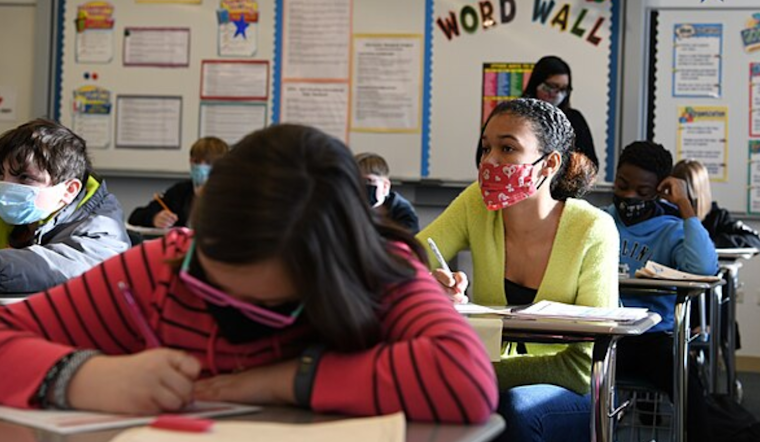
Pittsburgh Public Schools is testing a Hogwarts-style house system at nine middle schools this year, with Sterrett 6-8 in Point Breeze leading the charge. At Sterrett, students have been sorted into four value-based houses — Esperanza, Stallion, Mamba, and Tikanni — and now gather for regular house meetings, competitions, and conflict-resolution lessons designed to build a stronger sense of belonging. District leaders point to early signs of higher attendance and fewer suspensions and say they expect to bring the model to more middle schools next fall. Educators describe it as a practical way to be sure every student has a peer group and at least one adult in the building who really knows them.
How Sterrett’s houses work
Students and staff at Sterrett were sorted into houses during a celebratory ceremony and now meet regularly in mixed-grade teams for team-building, conflict-resolution, and schoolwide challenges, as reported by WESA. Teachers created house symbols, colors, and mottos to boost buy-in, and adults in all roles — including cafeteria workers and security staff — joined houses so students always have at least one safe adult inside their team. Houses earn points for positive behavior and challenges, a system leaders say nudges accountability toward peers and gives students more reasons to lean into school life. School staff told WESA the new rituals are already helping some students feel more connected across grades.
Duquesne’s early results and funding
Duquesne City School District, which launched a Ron Clark-inspired house program for seventh and eighth graders last year, says the model is now in its second year and folded into everyday routines, according to the district’s news release. Coverage of the pilot reported a 74% drop in disciplinary incidents during the first year, and Remake Learning lists Duquesne among districts that used a Tugboat Grant to get the experiment off the ground. The pilot built in incentives such as a student store and small rewards, and district leaders credit the structure with cutting referrals and helping students work through conflicts during house meetings.
From Atlanta to Point Breeze
Teachers from the nine Pittsburgh pilot schools traveled to the Ron Clark Academy in Atlanta to see a house system in real time and attend multi-day workshops on routines, rituals, and implementation strategies, in line with the Academy’s training offerings. The Ron Clark Academy runs immersive professional-development programs that show schools how to adapt a house model to local needs, with an emphasis on consistent routines and age-appropriate rituals. Many districts that adopt the approach tweak the details — from house names and symbols to incentives — to match their own school culture rather than importing the model wholesale. That training pipeline is one reason several nearby districts have rolled out similar pilots in recent years.
What educators and students are saying
Inside Sterrett, students and staff describe modest but noticeable cultural shifts. “And as phoenixes do, we rise,” an eighth grader told WESA, after talking about seeing more patience and team support during house competitions. Assistant Superintendent Melissa Pearlman told the same outlet that the house system helps students "come in knowing it's not just about them, but it's about everybody else that relies on them." Reporting on the program pointed to research that links strong student-teacher relationships with better reading and math performance and higher classroom participation, a connection officials say the house model is designed to reinforce.
Why the district is expanding
Pittsburgh Public Schools presents the house rollout as one tool for creating the kind of steady, welcoming school climates it wants in place ahead of the grade reconfigurations and facility changes laid out in its Future-Ready Facilities Plan, according to district planning materials. PPS’s Future-Ready planning documents highlight stabilizing school culture, predictable routines, and stronger relationships as part of a broader strategy to improve outcomes while the district weighs consolidation and other facility moves.
What comes next: whether the early gains in attendance and discipline hold as the house model spreads to more schools, and whether the everyday rituals can survive staff turnover and school reorganizations. Board discussions and school updates over the coming months should reveal how widely the house system ends up being adopted across the district.





.jpg)