

























































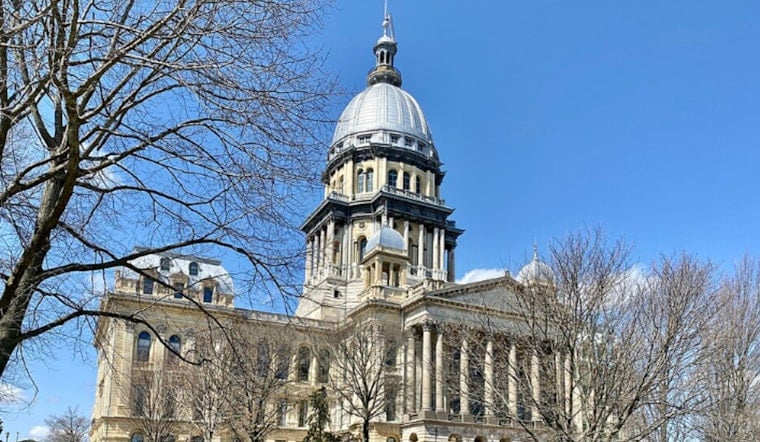
Illinois lawmakers inched another step into the state’s pension thicket on Friday, as the House Personnel and Pensions Committee signed off on a bill to extend the state’s voluntary pension buyout program. Backers say the move would keep more payout options on the table for retirees while chipping away at Illinois’ long-standing pension shortfall. Skeptics are not convinced it will make more than a dent.
The committee action was first reported by The Daily Line, which noted the bill advances a key piece of Gov. J.B. Pritzker’s pension strategy to pay down obligations. The vote sends the measure into the next phase of the House’s spring calendar, where it will need to survive additional deadlines before reaching the floor.
How the buyout works
Under current law, eligible members of the Teachers’ Retirement System (TRS), State Employees’ Retirement System (SERS), and State Universities Retirement System (SURS) can opt at retirement for a one-time lump-sum payment in exchange for a permanently reduced cost-of-living adjustment. The State Universities Retirement System details that option and the program’s deadlines. Participation is voluntary, and once a retiree elects to waive future benefits, the choice cannot be reversed.
Why supporters are pushing it
Supporters, including the governor, argue that the buyouts lower the long-term present value of future benefits and open up room in the state budget for other priorities. Gov. Pritzker has called for extending the program by another two years, through fiscal year 2028. His office estimates the buyout initiative has already reduced pension liabilities by about $2.9 billion since 2018 and that an extension could shave roughly another $1.4 billion off the state’s unfunded obligations, according to Capitol News Illinois.
The numbers behind the push
Even with the buyouts and better investment returns, Illinois’ pension systems are still deep in the hole. Combined actuarial unfunded liabilities sit in the neighborhood of $143 billion, and the overall funding ratio remains below 50 percent. The Commission on Government Forecasting and Accountability lays out those figures in a recent report to the General Assembly and notes that buyout programs have generated only modest actuarial gains so far. With liabilities on that scale, lawmakers are testing multiple tools rather than betting on a single fix.
Critics and limits
Fiscal watchdogs and some analysts warn that the headline savings can be misleading because market performance and other variables account for much of the change in pension math, and participation has fallen short of early expectations. Illinois Policy has argued that the program’s savings are difficult to separate from market-driven gains and that lower-than-expected take-up has blunted its impact. Earlier reporting in the Chicago Sun-Times similarly underscored that participation has been smaller than originally projected. Those concerns have kept the buyout concept controversial, even among lawmakers who like the basic idea of giving retirees more choice.
Next steps in Springfield
With the committee vote now in the books, the bill still faces a full legislative obstacle course: clearing House deadlines, passing the full chamber, winning Senate approval, and then landing on the governor’s desk. Session calendars tracked by Third Reading Consulting show an initial chamber committee cutoff coming later this month, leaving lawmakers limited time to move the measure.
If the buyout extension becomes law, retirees and state workers would have more time to consider a lump-sum offer at retirement, with the same tradeoffs and irrevocable choice that exist now. For Springfield, the move is one more piece of a patchwork response to a decades-old funding crisis, alongside bond strategies, budget decisions, and statutory tweaks that legislators say will be needed to stabilize the systems over the long haul. Expect more hearings and debate in the coming weeks as supporters lean on the promise of near-term savings and opponents press for deeper structural reforms.





