

























































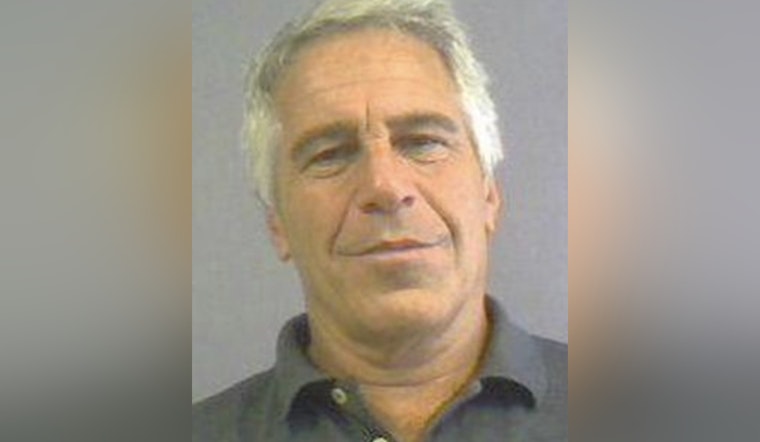
Jeffrey Epstein was not just working the phones and private jets in the years after his 2008 state conviction. According to a New York Times investigation published March 18, 2026, he was also running a quiet, yearslong campaign to scrub his criminal history from the internet and replace it with something far more flattering.
The New York Times reports that emails, invoices and Justice Department records trace a coordinated effort that began around 2010. In one early September 2010 exchange, a consultant pitched Epstein on making negative Google results "disappear." Epstein answered with a single word that the files show as an affirmative green light. From there, a small army of search consultants, content writers and website operators went to work trying to change what surfaced when people typed his name.
Payments And Pitchmen
Documents collected in public archives outline how much money flowed into this reputation triage. Records available through Epstein Media show multiple invoices and proposed packages that explicitly promise to clean up Epstein’s online footprint.
One invoice tied to a service labeled "Integrity Defenders" lists an "advanced" package priced at $2,499. Another firm, Reputation Changer, pitched a one month trial costing $12,500. Separate records show consultant Tyler Shears billing nearly $51,000 over seven months, while Mike Keesling received at least $22,500 for search management work.
How He Tried To Game Google And Wikipedia
The Times reports that the strategy leaned heavily on volume. Teams allegedly built fake profiles and websites, then stacked them with glowing material designed to outrank critical reporting. Offshore writers, including crews in the Philippines, produced content that painted Epstein as a benefactor and science enthusiast rather than someone with a sex offense conviction on his record.
According to The New York Times, the work extended to coordinated edits on Wikipedia and efforts to nudge Google’s autocomplete suggestions away from uncomfortable terms. Paid placements and targeted outreach tried to reframe Epstein as a philanthropist and patron of scientific research, all while critical stories were pushed lower and lower in search results.
Why This Matters For Search And Institutions
Experts describe these tactics as "reverse SEO," a kind of reputation judo that uses content seeding and link building to crowd out damaging information. Coverage by Forbes has traced how methods like these, especially when paired with paid placements, can quietly reshape what shows up on the first page of search results and tilt public perception.
Institutional Fallout
The revelations help explain how Epstein continued to enjoy access to elite institutions long after his conviction. A fact finding review at MIT concluded that the university’s Media Lab took roughly $750,000 in gifts linked to Epstein between 2012 and 2017. That tally, detailed by MIT News, has fueled ongoing questions about how major institutions vet donors and disclose controversial funding.
Legal Note
So far, public reporting has not identified any criminal charges that stem directly from the online cleanup operation. What is known rests on emails, invoices and archived web pages, much of it drawn from the Justice Department’s public Epstein archive. The department has said it will continue updating that repository as internal reviews proceed, according to its online releases.
Put together, the newly visible playbook shows how money, content mills and search mechanics can be used to rewrite what people see about a powerful figure, at least for a while. As journalists and researchers keep mining the files, the disclosures are likely to intensify calls for more transparency from search platforms and for universities, labs and other institutions to confront how carefully curated reputations helped open their doors to Epstein in the first place.





